Egypt Unveiled
Ponderings from My Egyptian Journey
I was sitting on my patio in California, less than twenty-four hours out of Egypt, watching a hummingbird work its way through the bougainvillea, when something in me finally broke open. Not with grief, exactly. With recognition.
Just days earlier, in the middle of an Egyptian night, my phone had lit up with a U.S. State Department Travel Alert urging Americans to leave as soon as possible. I was five days into leading a group through the country when that message arrived — the kind that demands immediate, clear-headed action regardless of the hour. By early morning I had quietly arranged contingency flights out of Luxor and onward from Cairo, and then I waited.
We had gathered in the soft Luxor dawn for what was meant to be one of the journey’s most anticipated mornings: an early departure to the Valley of the Kings. Instead, I laid out to the group the situation plainly that I had not once felt unsafe since arriving in Egypt, and that whatever had prompted the State Department’s urgency, it was difficult to reconcile with the Egypt we had been living inside. And yet the alert was real, and the decision was ours to make.
The group decided we would leave the following morning. And then, with that settled, we went ahead and lived the day we had planned. We departed early the next morning with the particular heaviness of people who are not ready to go but know they were lucky to have been there at all.
And yet, back home in California, the San Diego quiet feeling like a different planet, I found myself thinking that this was among the finest trips of my life, not in spite of how it ended, but in some ways because of it. There is something clarifying about a journey that doesn't unfold as planned, something that strips away the itinerary and leaves only what actually mattered: the moments, the monuments, and the people you shared them with. This particular group made every day richer — their curiosity, their willingness to be moved, their company at every table and in every tomb corridor reminding me why I do this work, and why travel, at its best, is less about the places than the people you experience them alongside. Egypt had changed something in all of us. It operates on its own frequency: electric and ancient at once, layered with five thousand years of human ambition. It is the rare country that does not simply host you but insists upon you, and once it has, you are never quite finished with it.
Arrival: Cairo at Midnight
We landed at Cairo International just after midnight, and Egypt did not wait until morning to introduce itself. Our meet and greet contact was waiting at the gate, and what followed was one of those arrivals where the friction of international travel simply evaporated. He moved us through immigration and customs with the calm authority of someone who has done this ten thousand times, had a team to retrieve our luggage from baggage claim, and, then, within minutes we were outside, looking out at a city that apparently does not sleep and has no intention of starting.
Cairo at midnight could have passed for Manila, where I grew up in the Philippines. Red and yellow lights stretched as far as you could see, an unbroken river of vehicles operating entirely without lanes, without apparent logic, and yet somehow, with a kind of collective improvised choreography, moving. Thirty minutes later, we were pulling up to the Four Seasons Cairo at Nile Plaza, and the contrast was immediate and total. Stepping inside was like stepping into a sealed world, all of Cairo’s barely-contained electricity remaining outside while the lobby received us with the quiet confidence of a property that knows exactly what it is there to do. Not the newest Four Seasons, nor the most lavishly appointed, but meticulously maintained, recently renovated rooms on our floor, and in every sense that counts, exactly the right base.
Easing Into the Ancient World
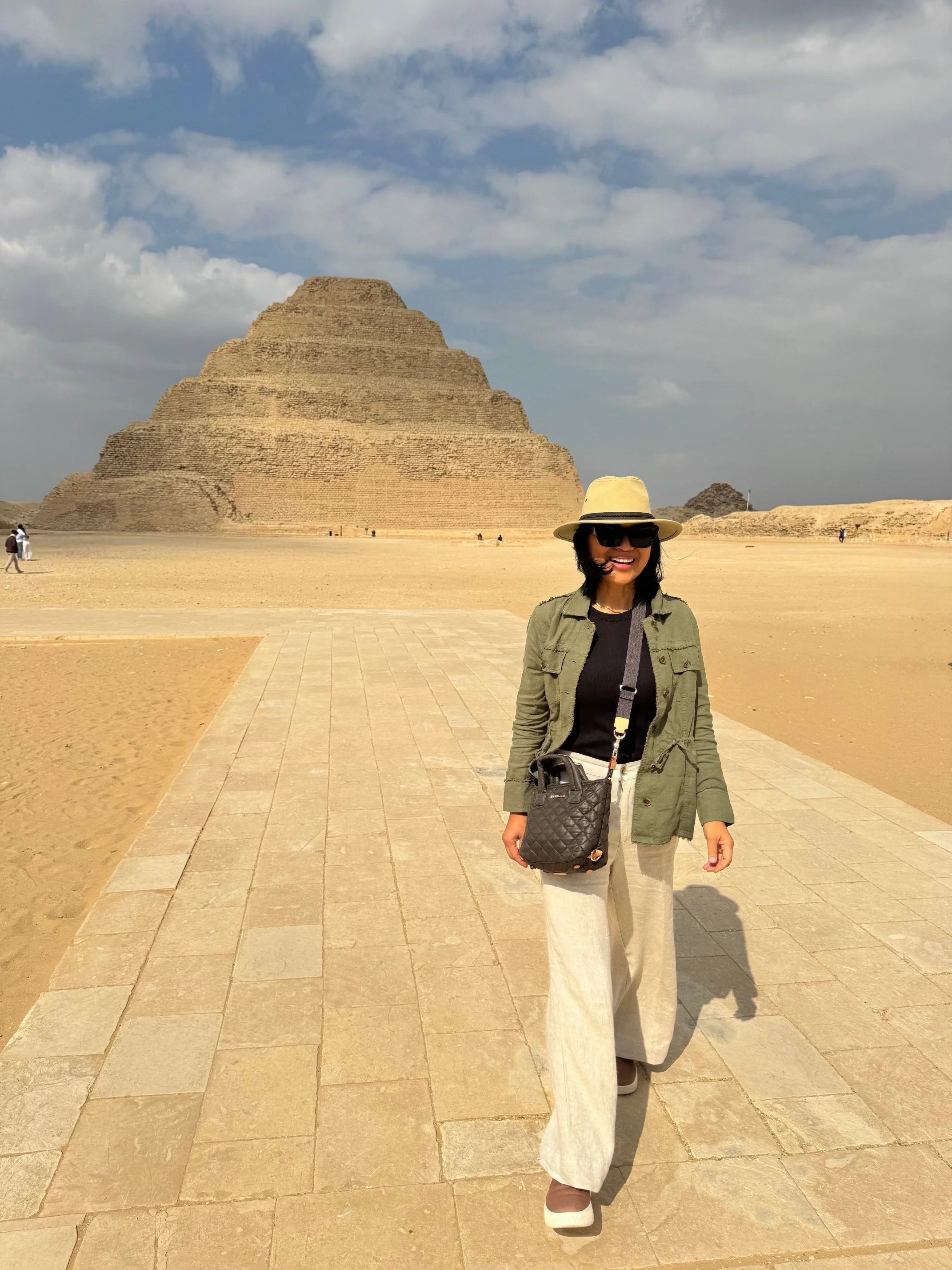
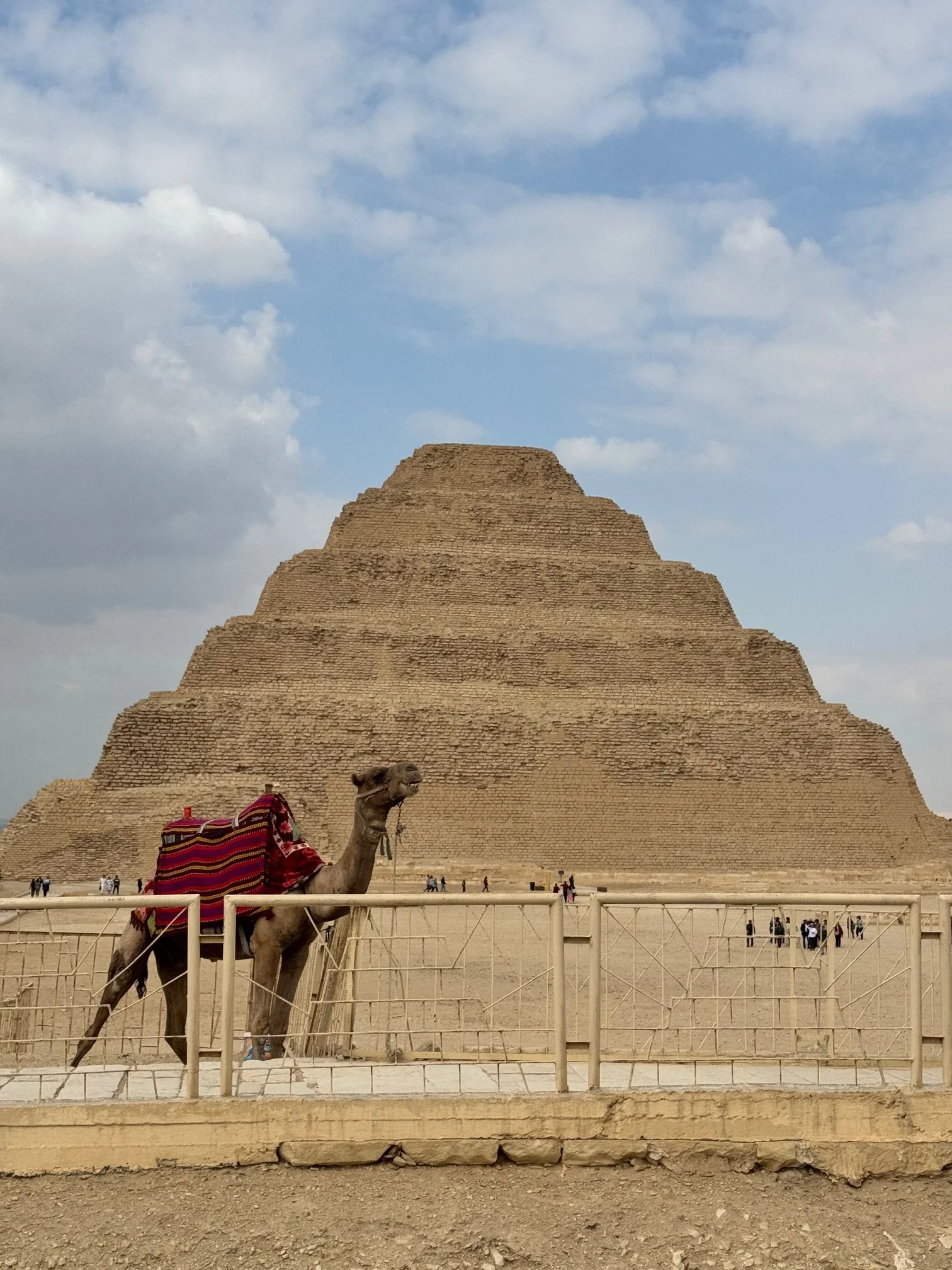
On our first morning I made a deliberate choice: we would not start with the famous pyramids of Giza. Instead, after a leisurely breakfast at the Four Seasons, we headed to Saqqara, a necropolis thirty minutes south of Cairo and home to some of the oldest pyramids ever built, including the Step Pyramid of Djoser, the earliest large-scale stone structure on earth. On the morning we visited, it was nearly empty.
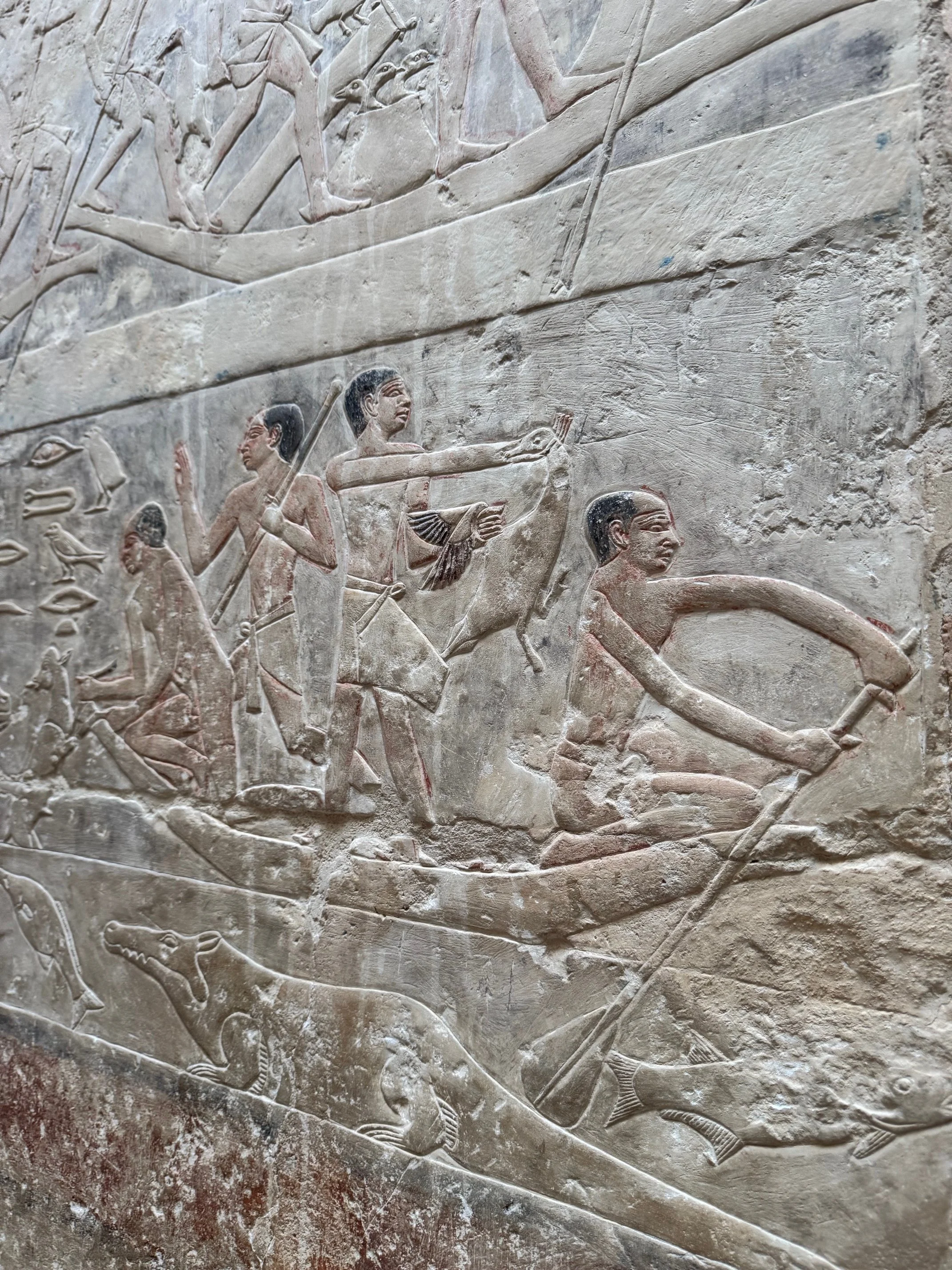
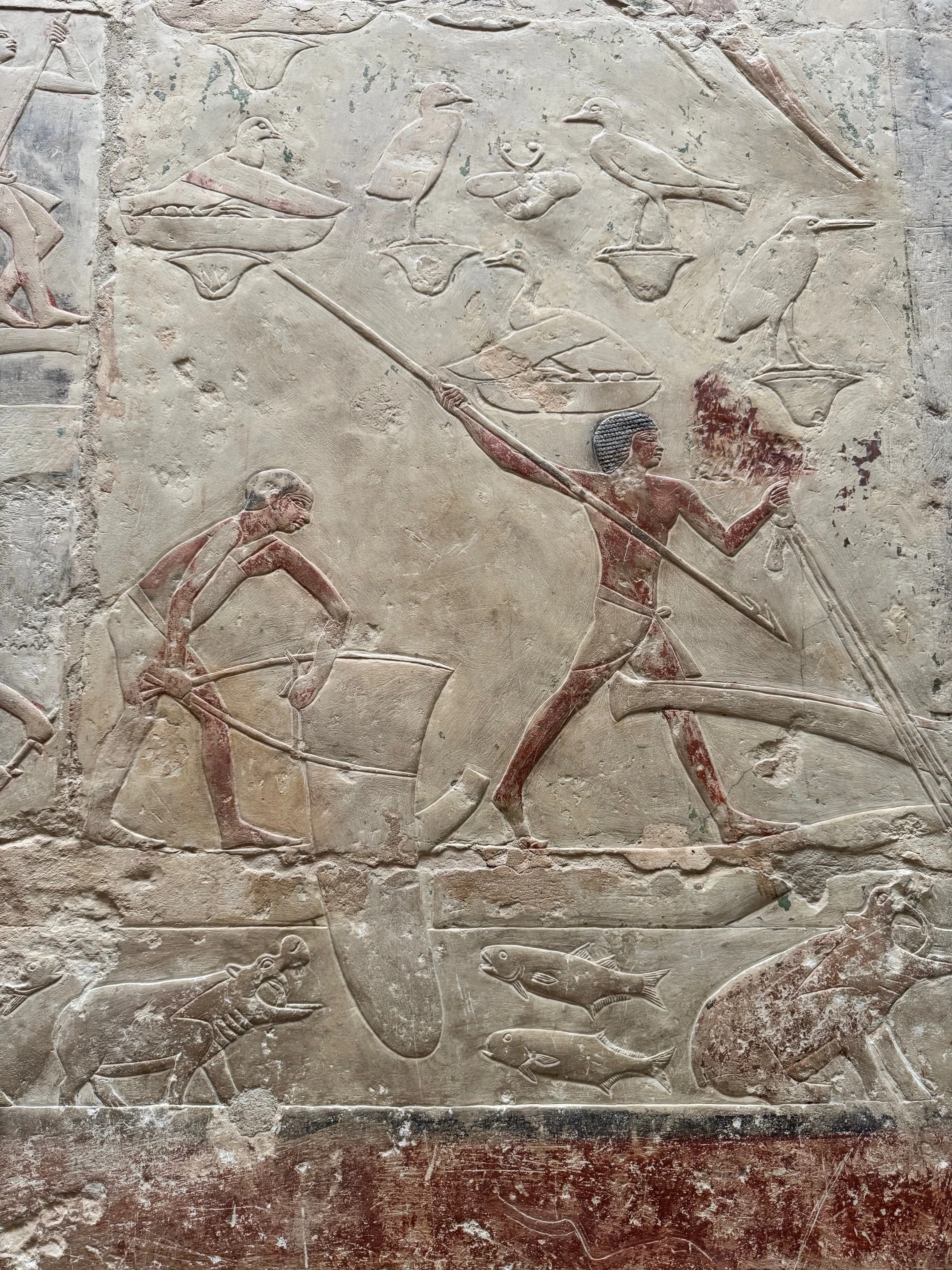
The Step Pyramid of Djoser is a more intimate introduction to ancient Egypt than anything at Giza. But it was the surrounding tombs that stopped our group cold. For most of us, it was our first encounter with painted walls and hieroglyph-covered corridors: scenes of daily life in ochre, turquoise, and black, figures harvesting grain and making offerings, preserved with a vividness that photographs cannot prepare you for. To stand there, in near silence, with almost no one else present, and feel thousands of years collapse into a single moment is exactly the way to begin. Not with scale and spectacle, but with intimacy. Saqqara taught our group how to look, and everything that followed was richer for it.
From there we drove to Zamalek, Cairo’s elegant island neighborhood in the middle of the Nile, lined with embassies, old trees, and streets quiet enough to walk without intention. We moved between boutiques carrying handmade pottery, hand-woven textiles, and art galleries. Ancient Egypt in the morning, modern Cairo in the afternoon. As first days go, close to ideal.
A Private Audience with King Tut
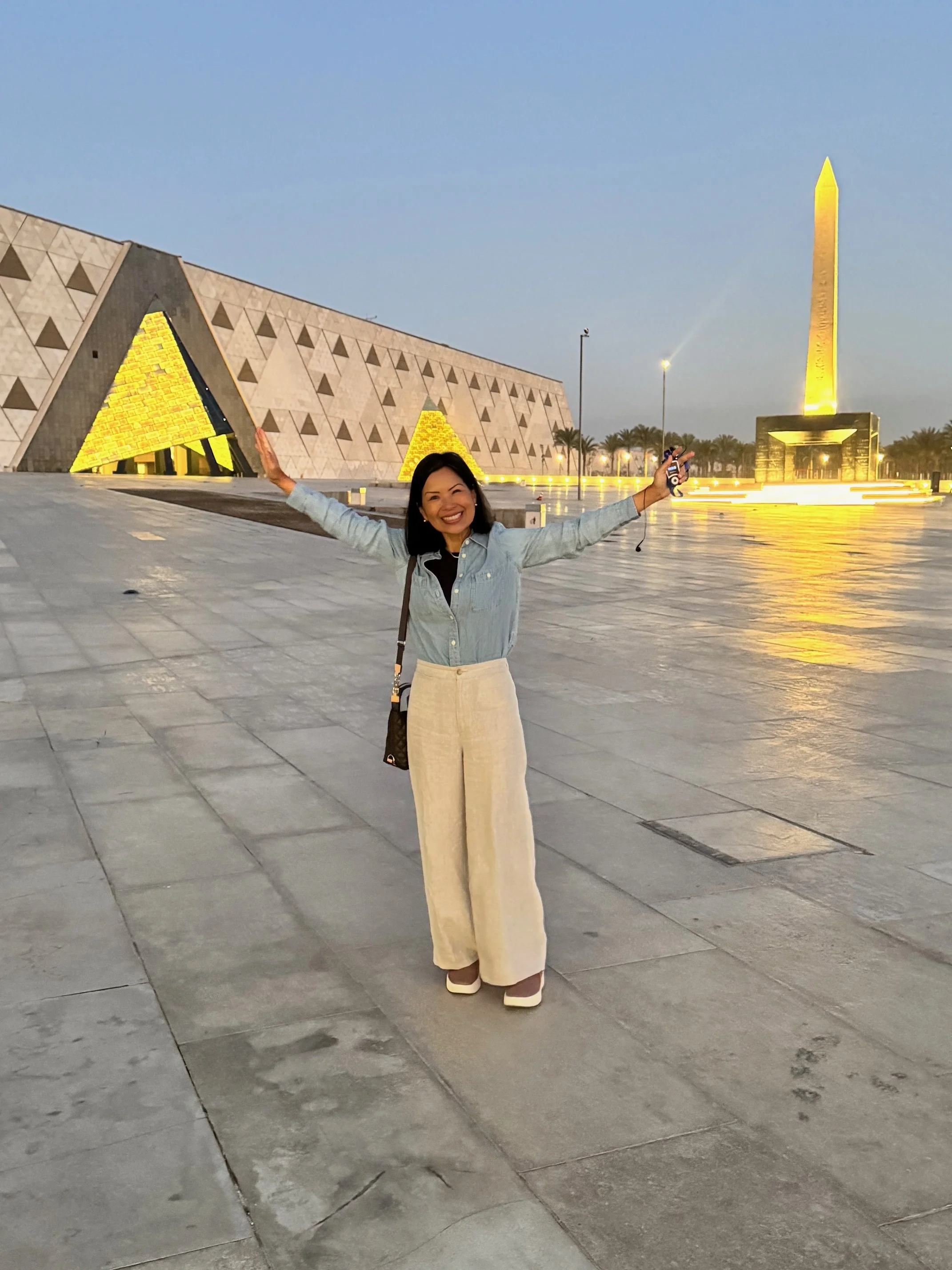
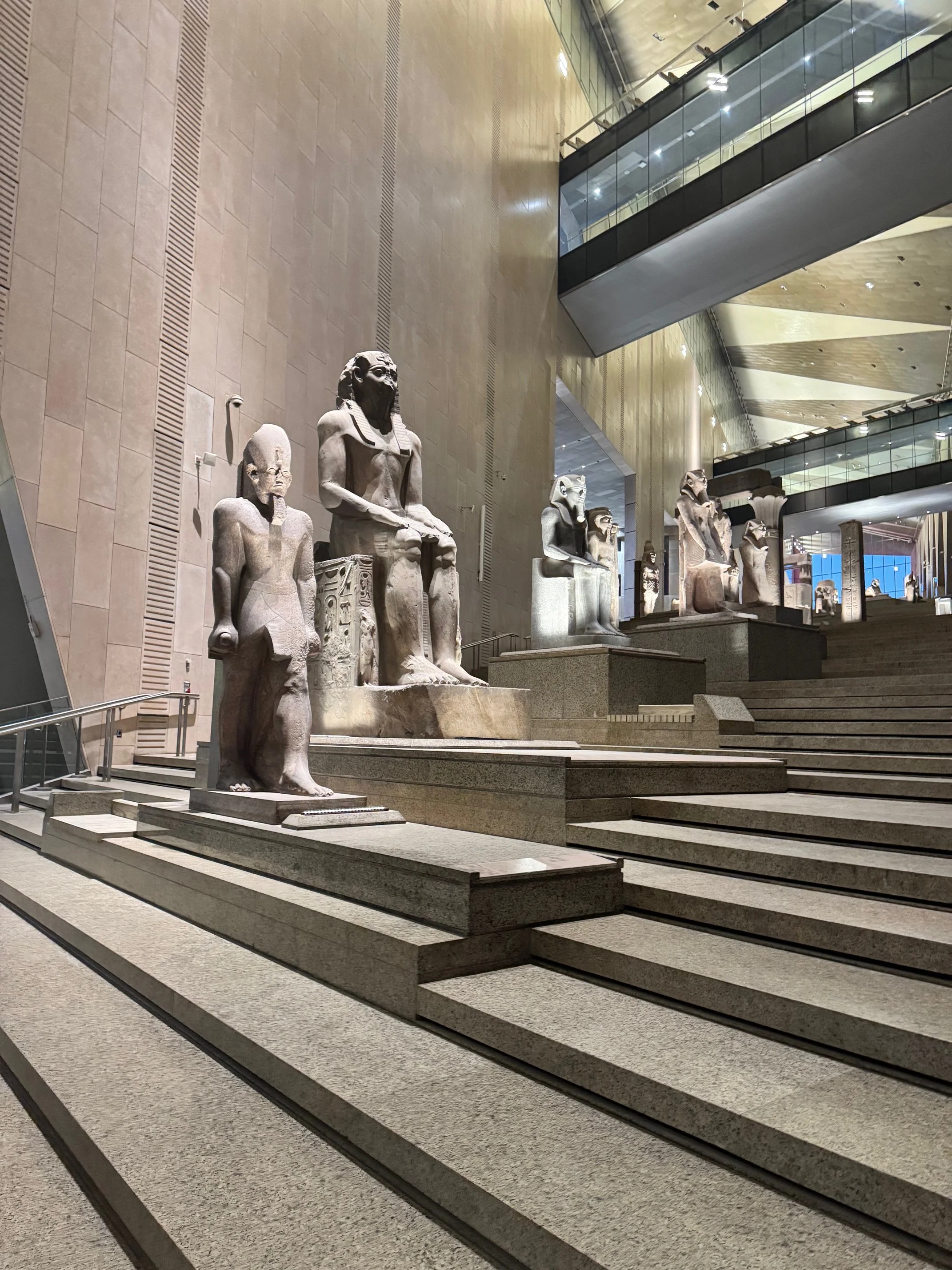
Day 2 arrived with an early wake up and a particular sense of great anticipation. We were headed to the Grand Egyptian Museum, for our group’s exclusive access tour before it opened to the public. The Grand Egyptian Museum is itself an architectural event. It is a vast angular structure of translucent stone designed by the Irish firm Heneghan Peng, one of the largest museum buildings on earth. Arriving before the crowds, with the monumental entrance hall entirely to ourselves, was extraordinary. The Staircase of the Pharaohs — a grand processional flight lined with colossal royal statues relocated from sites across Egypt — rises before you in a silence the building seems designed to amplify. We stood at its base in awe, dwarfed by figures carved three thousand years ago.
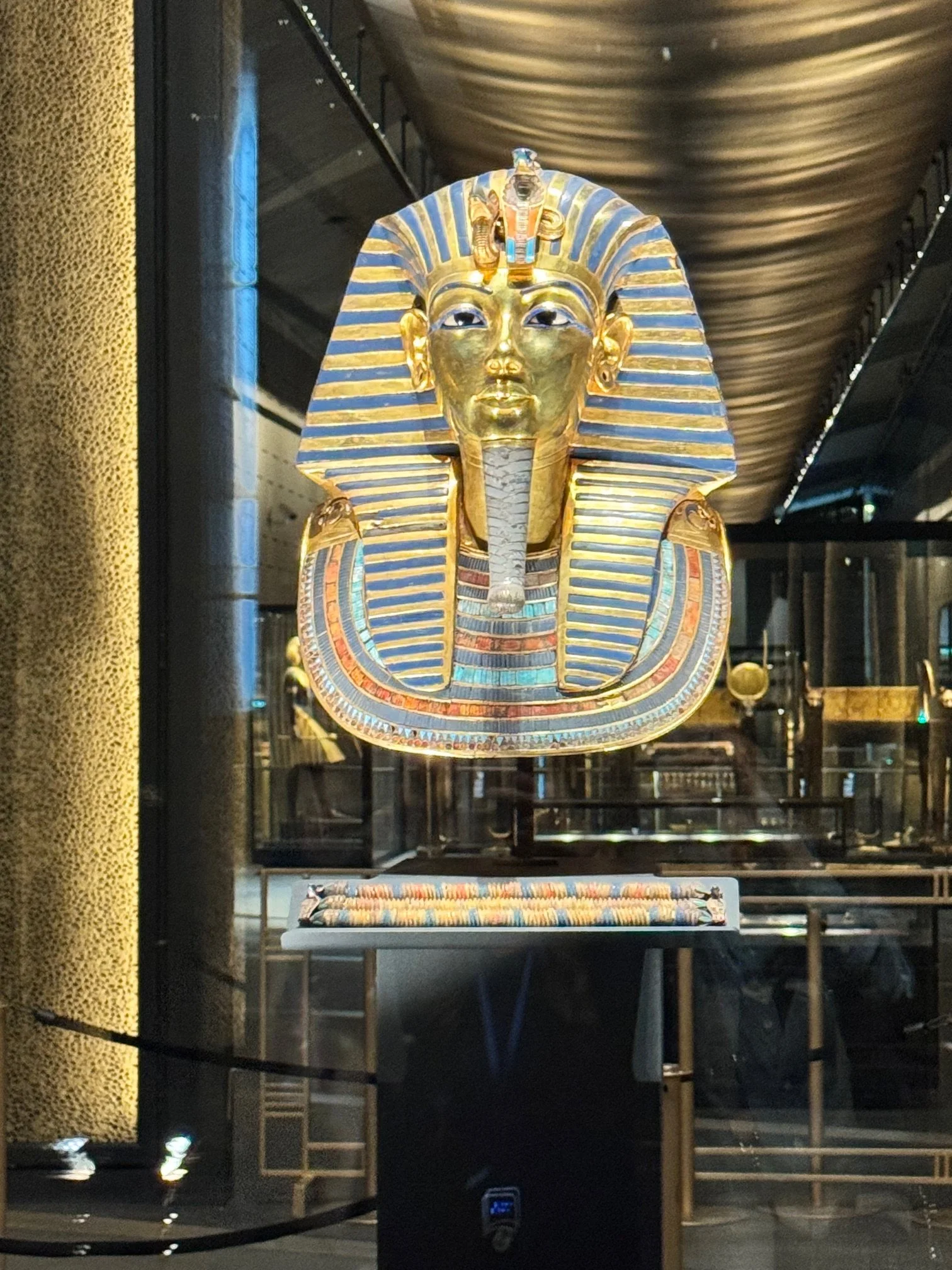
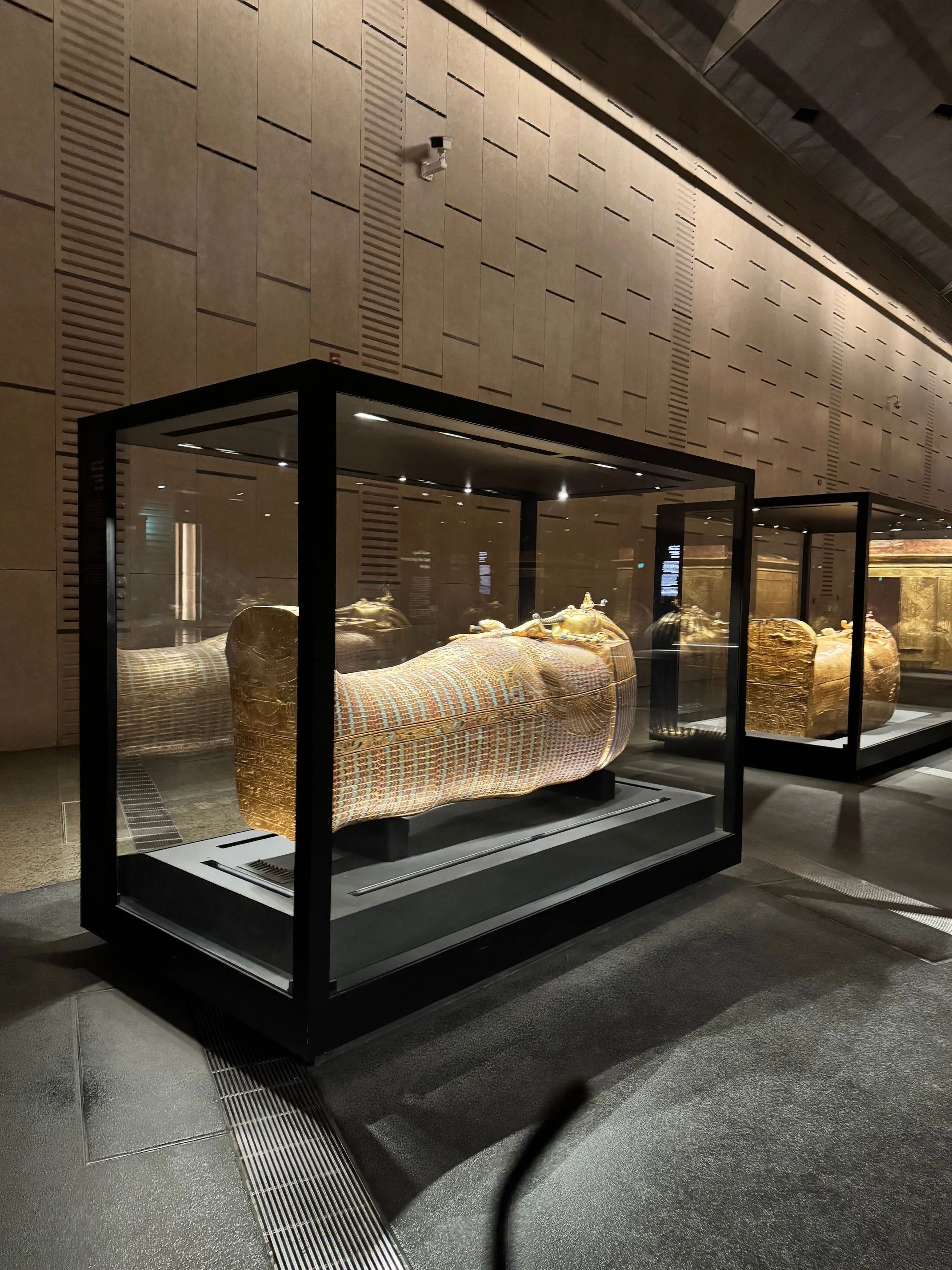
I had arranged an exclusive, early access tour of the King Tut Gallery which itself spans approximately 75,000 square feet within the Grand Egyptian Museum. The boy king’s collection contains more than 5,000 objects from his tomb (which we would visit in Luxor), such as the golden death mask, the canopic shrine, the gilded chariots, the inlaid jewelry, all assembled 3,300 years ago by craftsmen whose skill remains inexplicable. We stood in near-silence while our guide spoke in a low voice calibrated to the gallery, and I watched my clients do what the best travel experiences produce: become so completely present that everything else going on in their lives became muted.
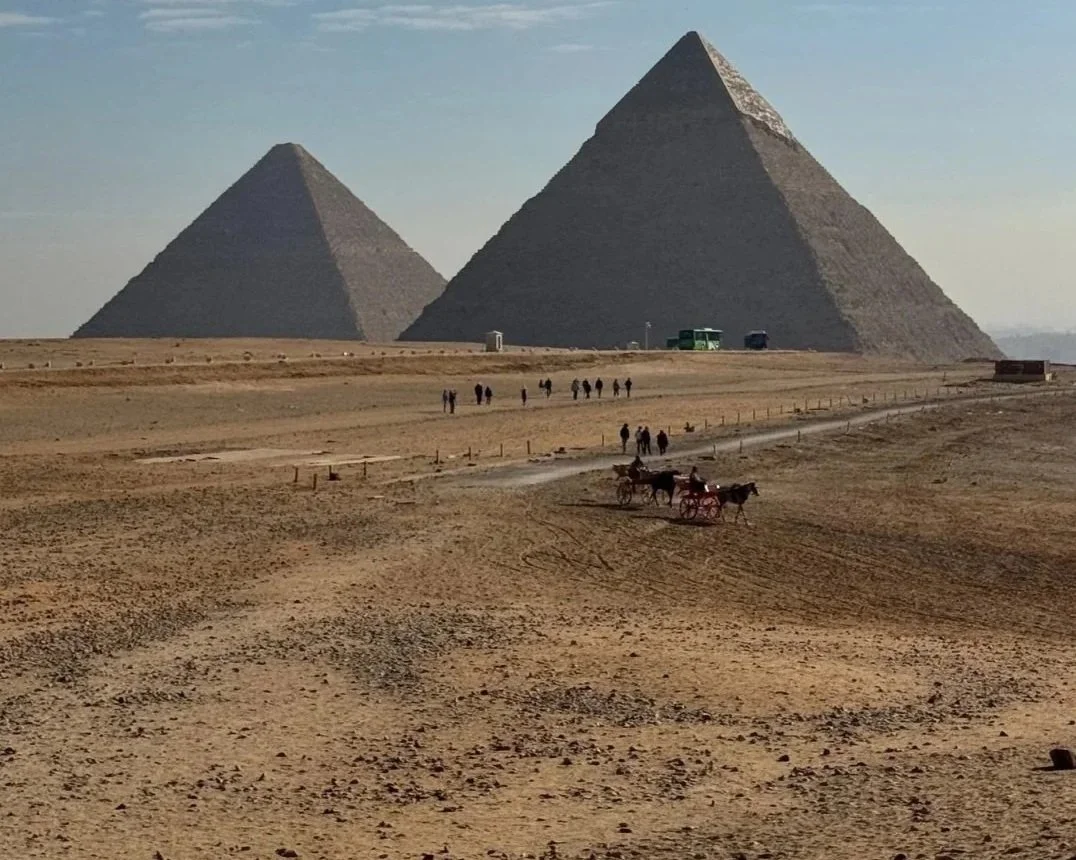
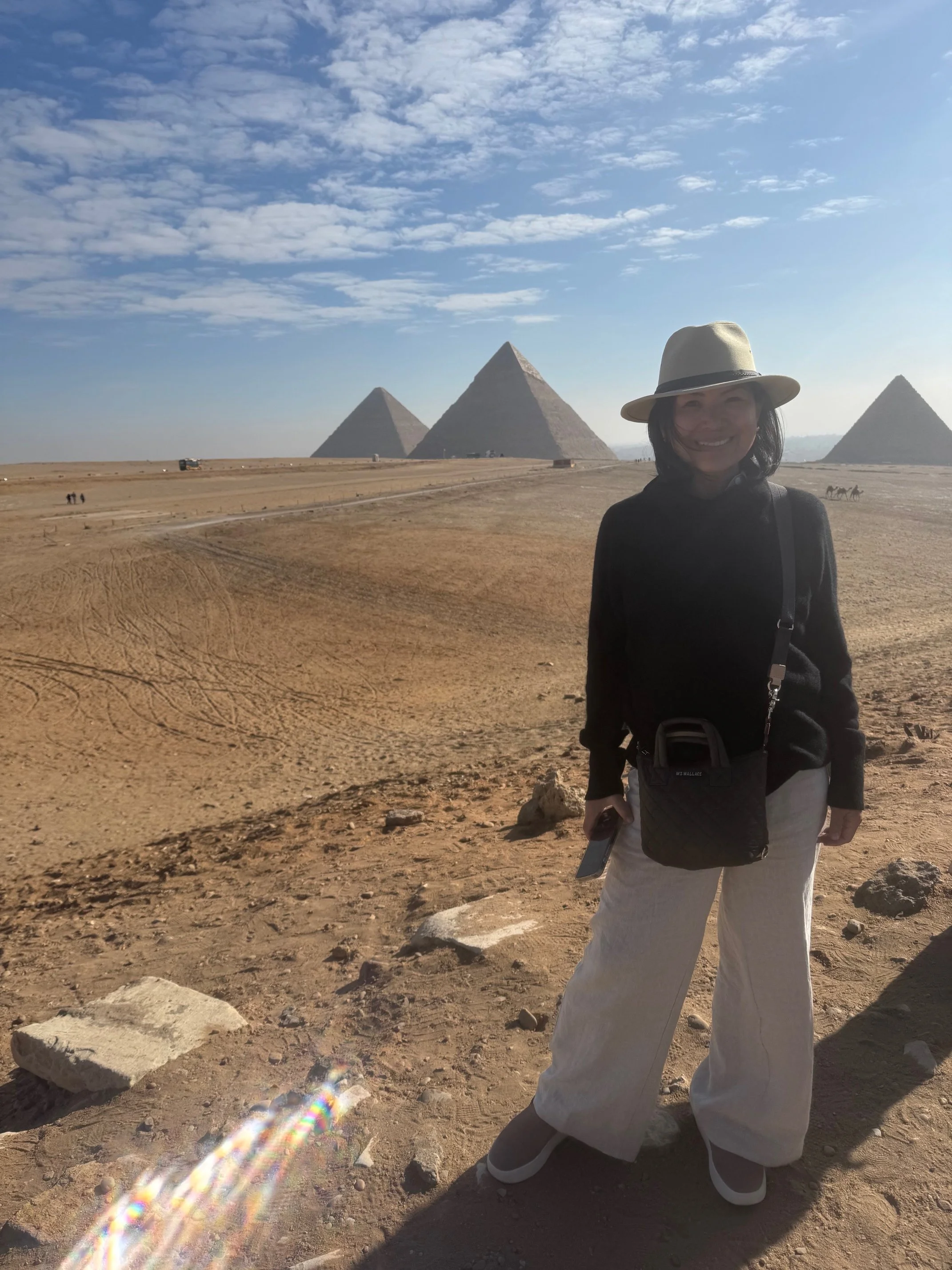
From the Grand Egyptian Museum we made the short drive to the Giza Plateau, where priority access and private golf carts meant no queues, no chaos, just the monuments themselves. The Egyptian government has undertaken a sweeping reorganization of the site such that timed entry controls the entire plateau and private buses and cars are banned. The result is a site that finally breathes and is nothing like the chaos that visitors experienced even just a few years ago.
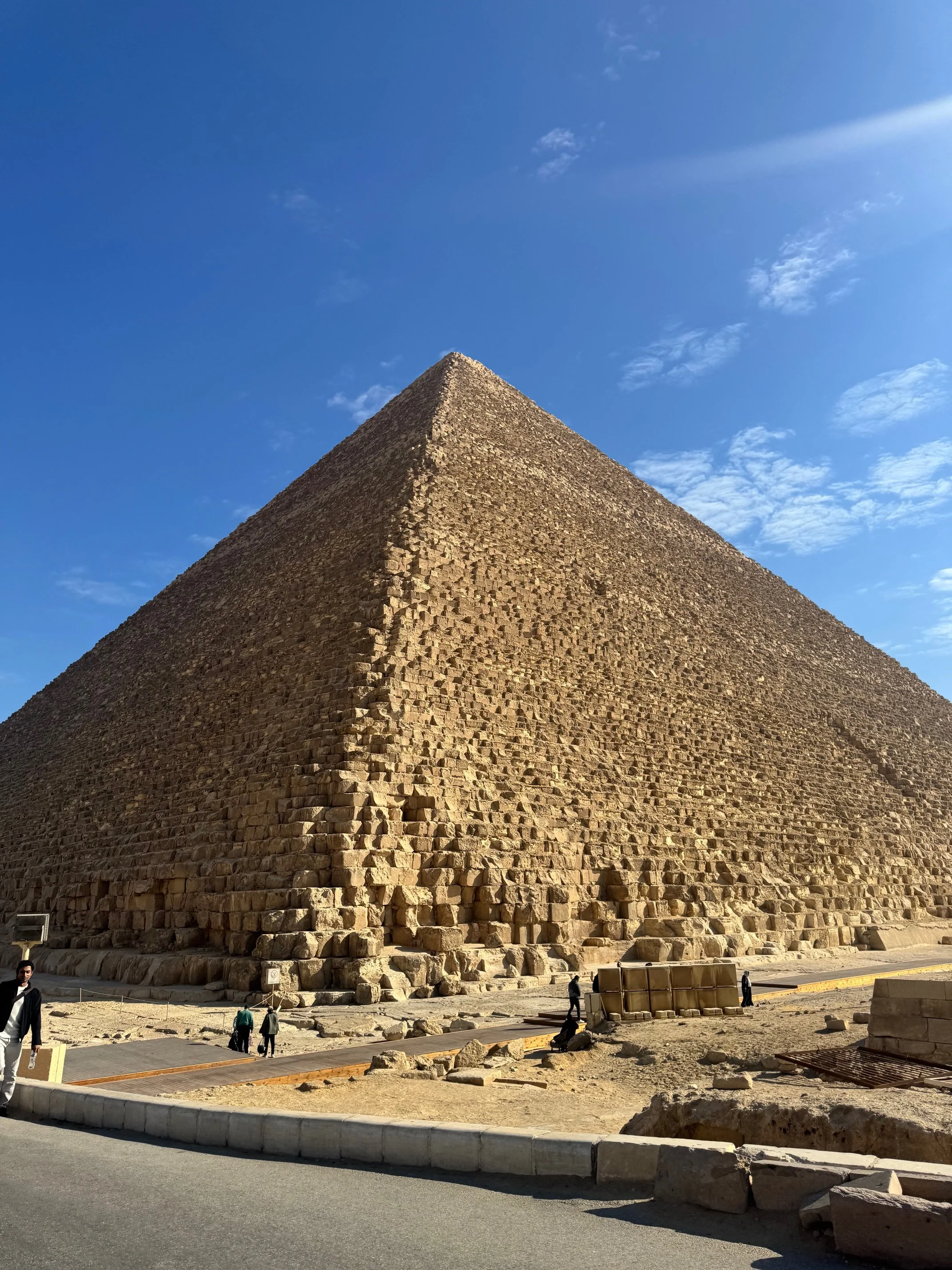
What you feel in the presence of the pyramids is small. Productively, instructively small. The Great Pyramid of Khufu held the record as the tallest man-made structure for nearly four thousand years. These were royal tombs, built to launch pharaohs into an afterlife the ancient Egyptians regarded not as metaphor but as certainty, a continuation of existence requiring careful preparation and monuments built to last forever. That conviction, standing at the base of Khufu’s tomb, feels less remote than you might expect.
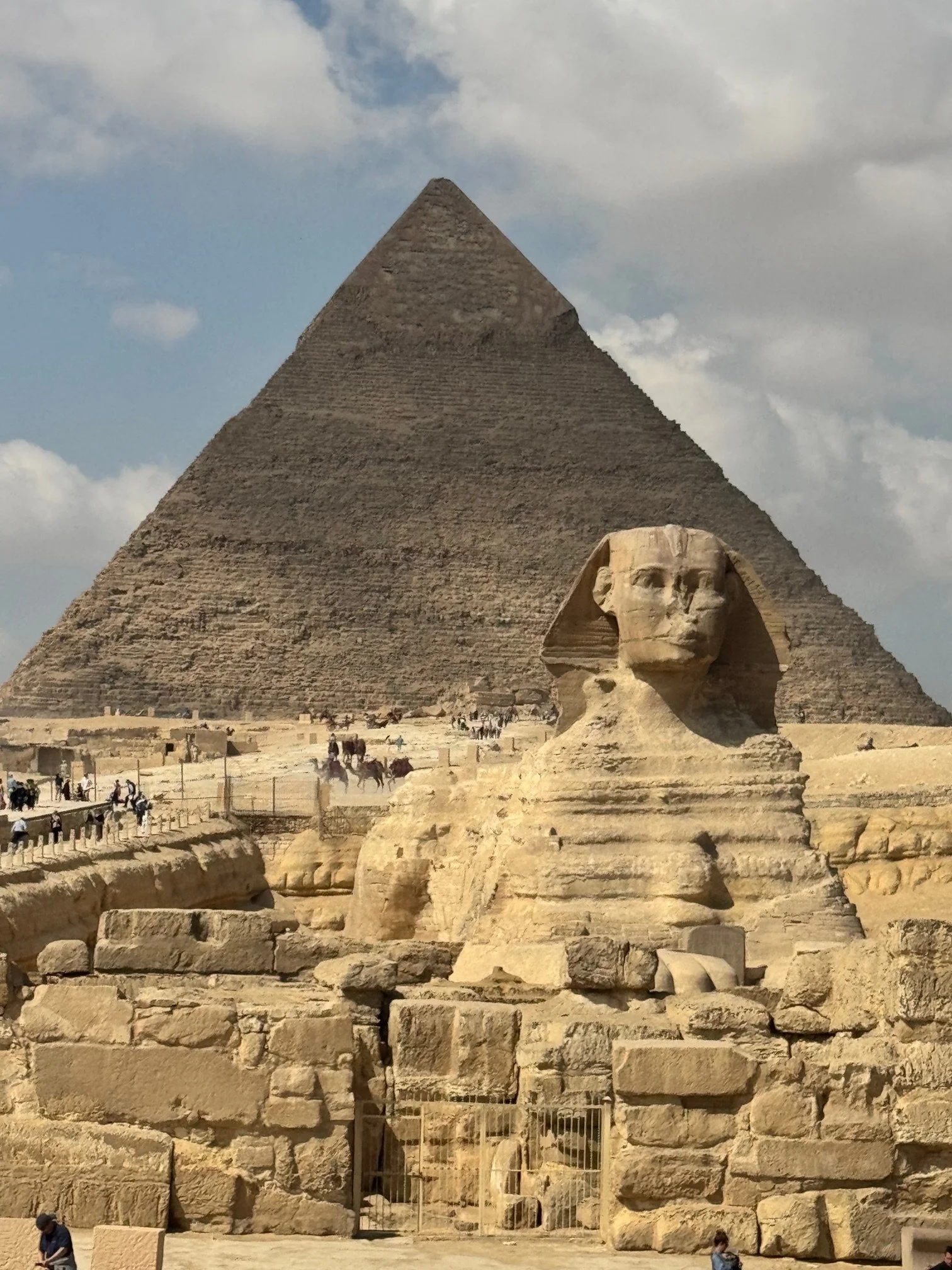
The Great Sphinx emerged from the morning haze when we reached it: 240 feet long, 66 feet high, carved from a single ridge of limestone, gazing eastward with an expression that has weathered millennia and still manages to convey something that feels almost like patience. The best monuments do not meet your expectations, they replace them with something you hadn’t imagined. While our group ventured inside the Great Pyramid of Khufu, I found a spot on the warm limestone and sat for a while, looking out across the plateau. I had dreamed of this moment since childhood — the pyramids of Egypt, impossible and real all at once — and I wanted to hold it still long enough to actually feel it.
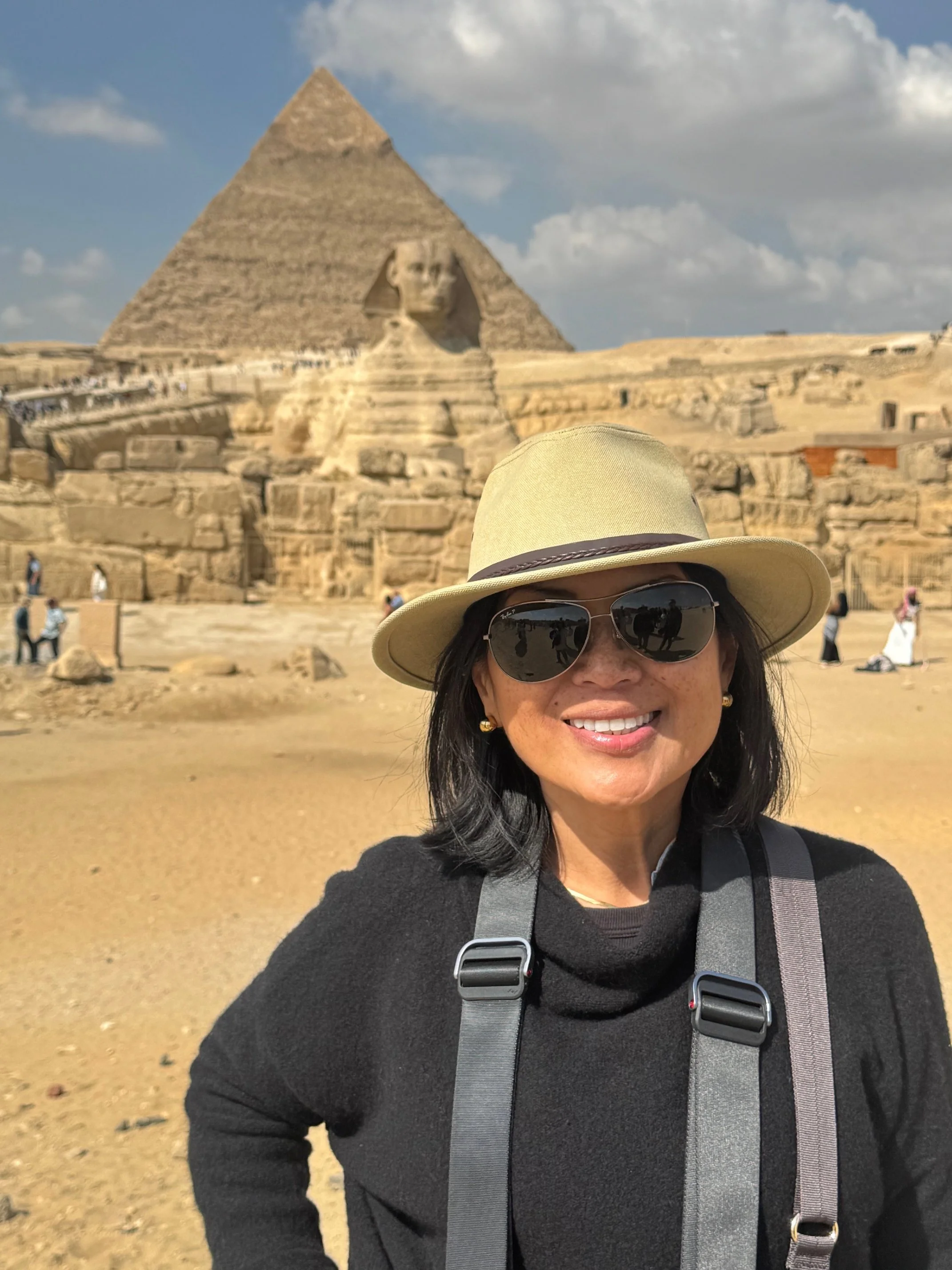
Cairo: The City That Contains Multitudes
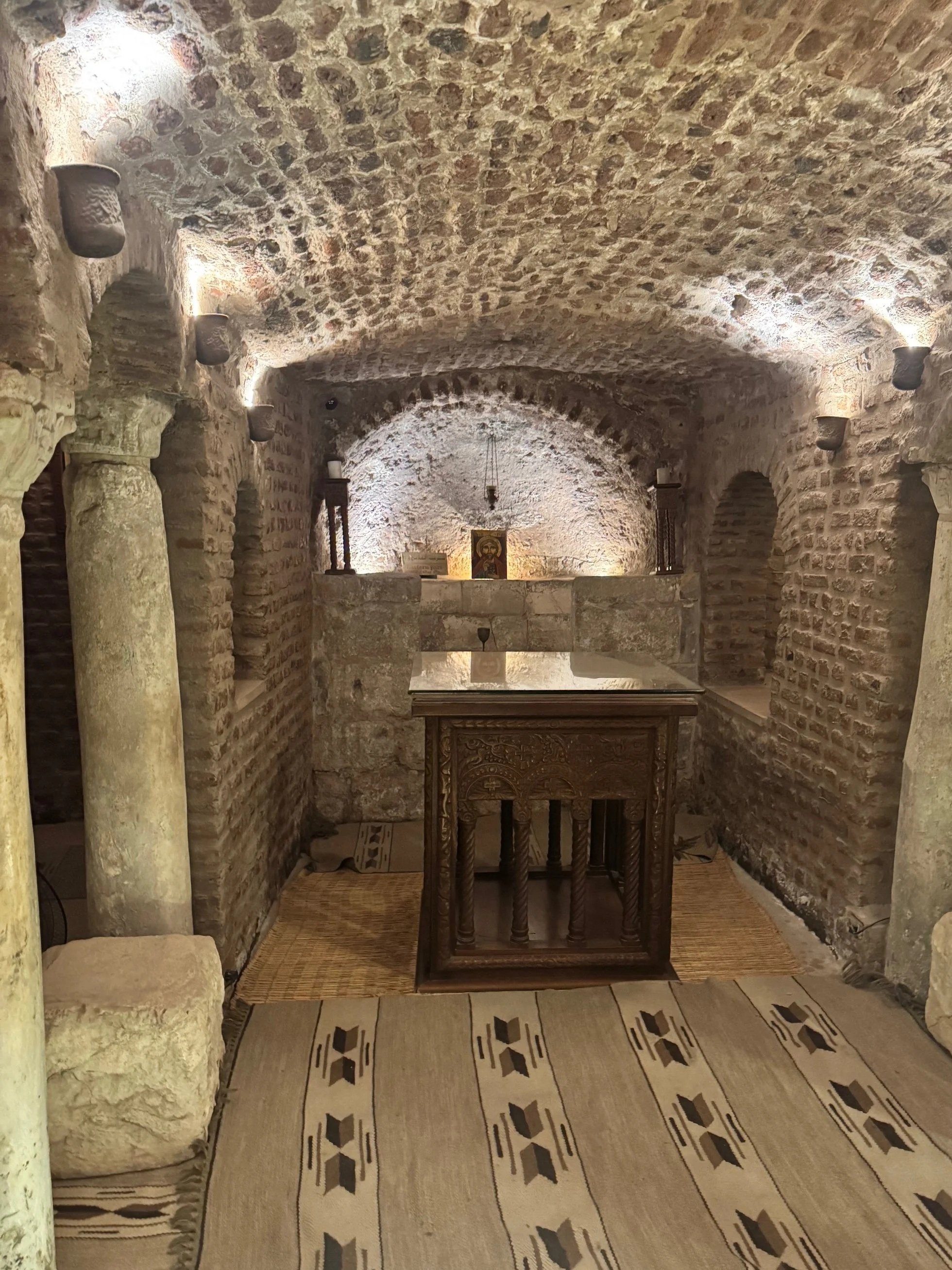
On Day 3 we set aside the ancient world and let Cairo itself take over. Coptic Cairo, in the city’s southern reaches, holds one of the world’s oldest continuous Christian communities. The Hanging Church, built above a Roman gatehouse and dated to the third century, is still a functioning place of worship. Beneath the nearby Church of St. Sergius and Bacchus, we descended thirty-three feet into a stone crypt that tradition holds was the refuge of the Holy Family during their Flight into Egypt, a cave where Jesus, Mary, and Joseph are believed to have sheltered for nearly three months, its ancient well and worn stone walls making the silence inside feel less like history and more like something still present. Walking these alleyways, you feel time operating in layers rather than sequence. This is where monotheism organized itself while the rest of the world was still sorting out the question.
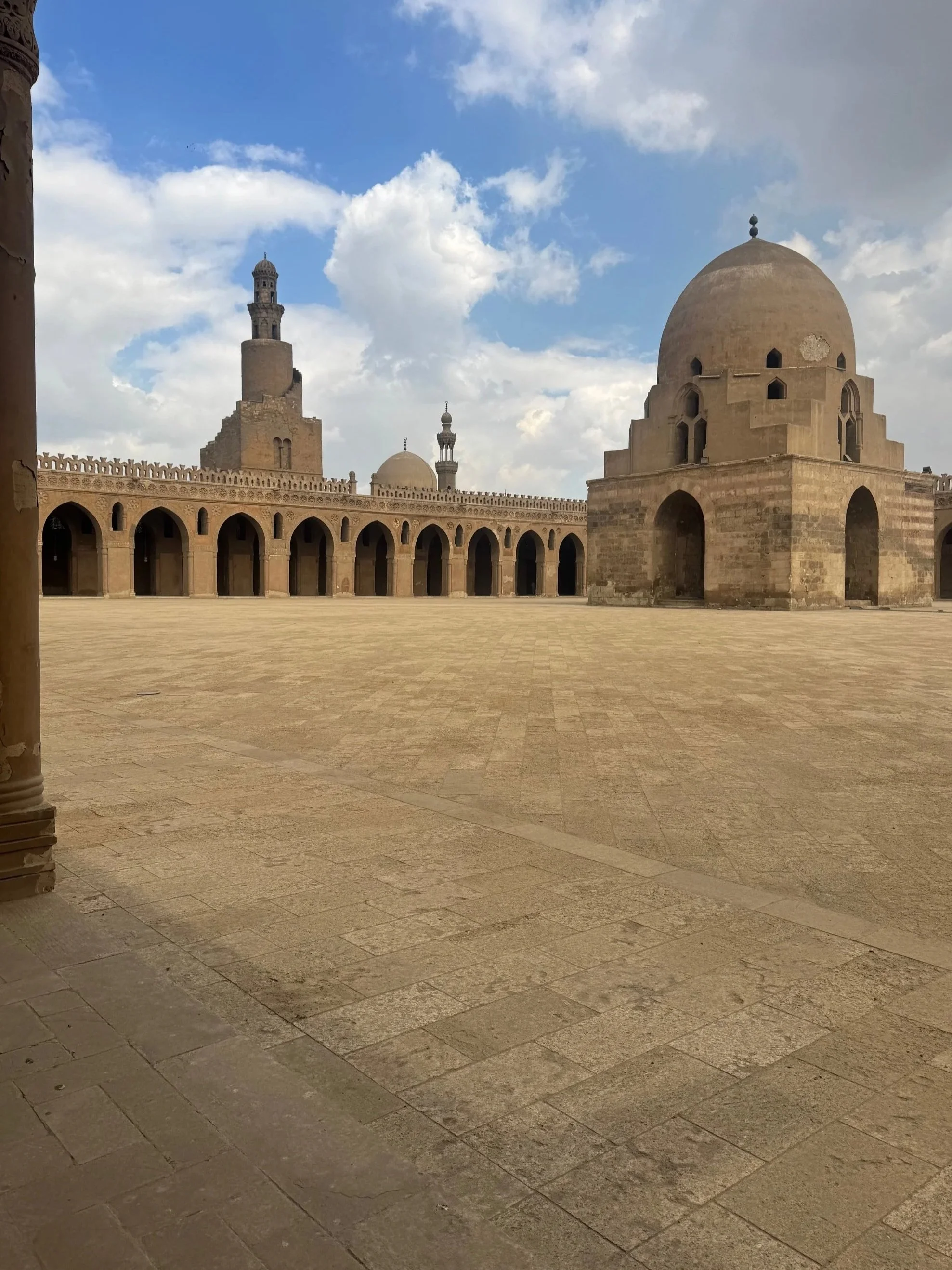
Islamic Cairo operates at a different register. The Khan el-Khalili is one of the oldest and most storied bazaars in the world, where vendors have been trading spices, perfumes, gold, and hand-crafted goods in the same labyrinthine alleyways since the fourteenth century. We lost ourselves in it willingly — the scent of oud and cardamom, the flash of hammered copper, the vendors calling from doorways framed by mashrabiya screens — before emerging into the broader neighborhood where the Mosque of Muhammad Ali's Ottoman silhouette rises above the Citadel and the call to prayer ricochets off walls that have been absorbing it since the ninth century. The Citadel's elevated position over the city, with pyramids visible at one horizon and the Nile at another, is one of those views that recalibrates your understanding of urban scale.
Luxor: Where the Gods Live
On Day 4, we took the hour’s flight south to Luxor and watched the landscape shift from Cairo’s city sprawl to the narrow green ribbon of the Nile Valley cutting through ochre desert. Luxor’s airport is small and unhurried, and the moment I stepped onto the tarmac, I knew we were somewhere completely different. Cairo pulses and presses. Luxor simply exists, ancient and unhurried, as though it has long since made its peace with time.
Waiting for us in the arrivals lane were a vintage Land Rover Defender and a classic Mercedes sedan, both from Al Moudira Hotel’s private collection. The drive to the Al Moudira Hotel took us through West Bank roads past sugarcane fields and limestone cliffs concealing the Valley of the Kings. We turned down a lane and stopped before a plain, unmarked wall with no sign, no façade, no announcement. Al Moudira Hotel does not advertise itself. It simply waits.
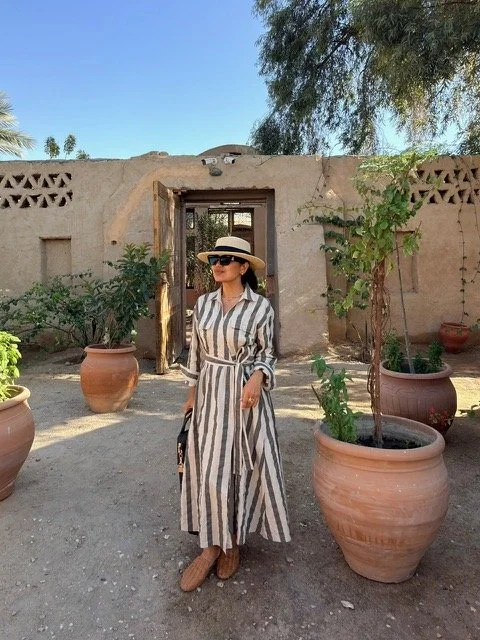
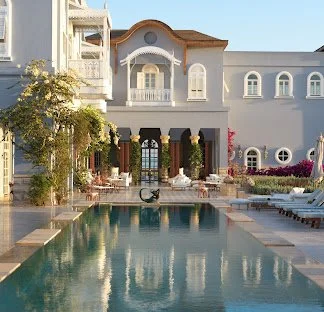
What lies beyond that wall is one of the great reveals in travel. Bougainvillea in deep magenta and coral, jasmine through stone archways, date palms casting shadows over hand-laid tilework. The architecture is a love letter to the region. Nubian domes in warm terracotta, Syrian mashrabiya screens filtering light into lacework on the walls, hand-carved wooden doors salvaged from centuries-old homes. Mosaic fountains murmur in courtyards. Pomegranate trees lean over low walls. The Villa Nubia — our private five-bedroom home for two nights — has its own pool and dedicated staff, and waking there in the warm Luxor light, with no sound except birds and the breeze through the palm trees, reset something in all of us that Cairo’s intensity had wound tight.
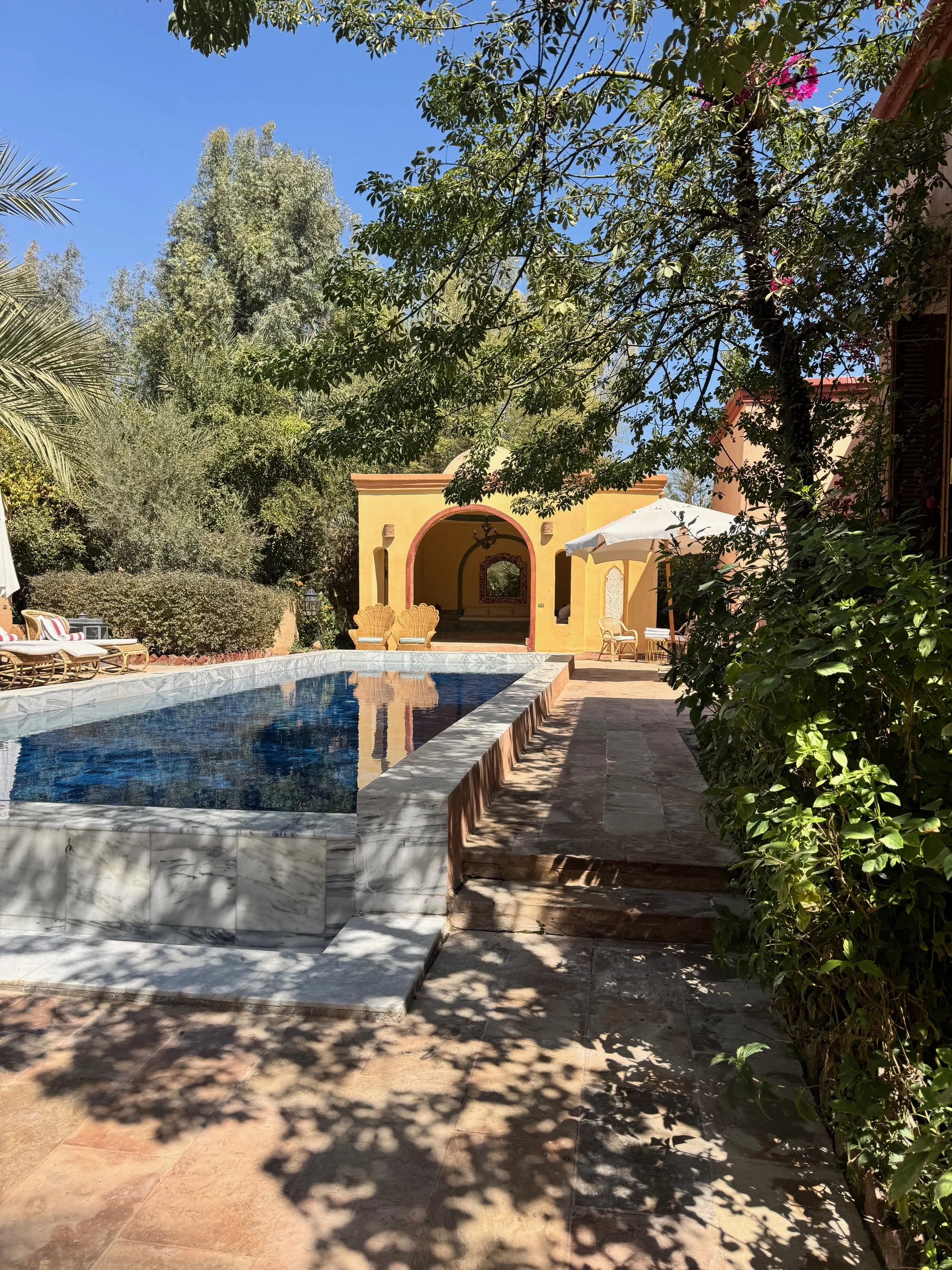
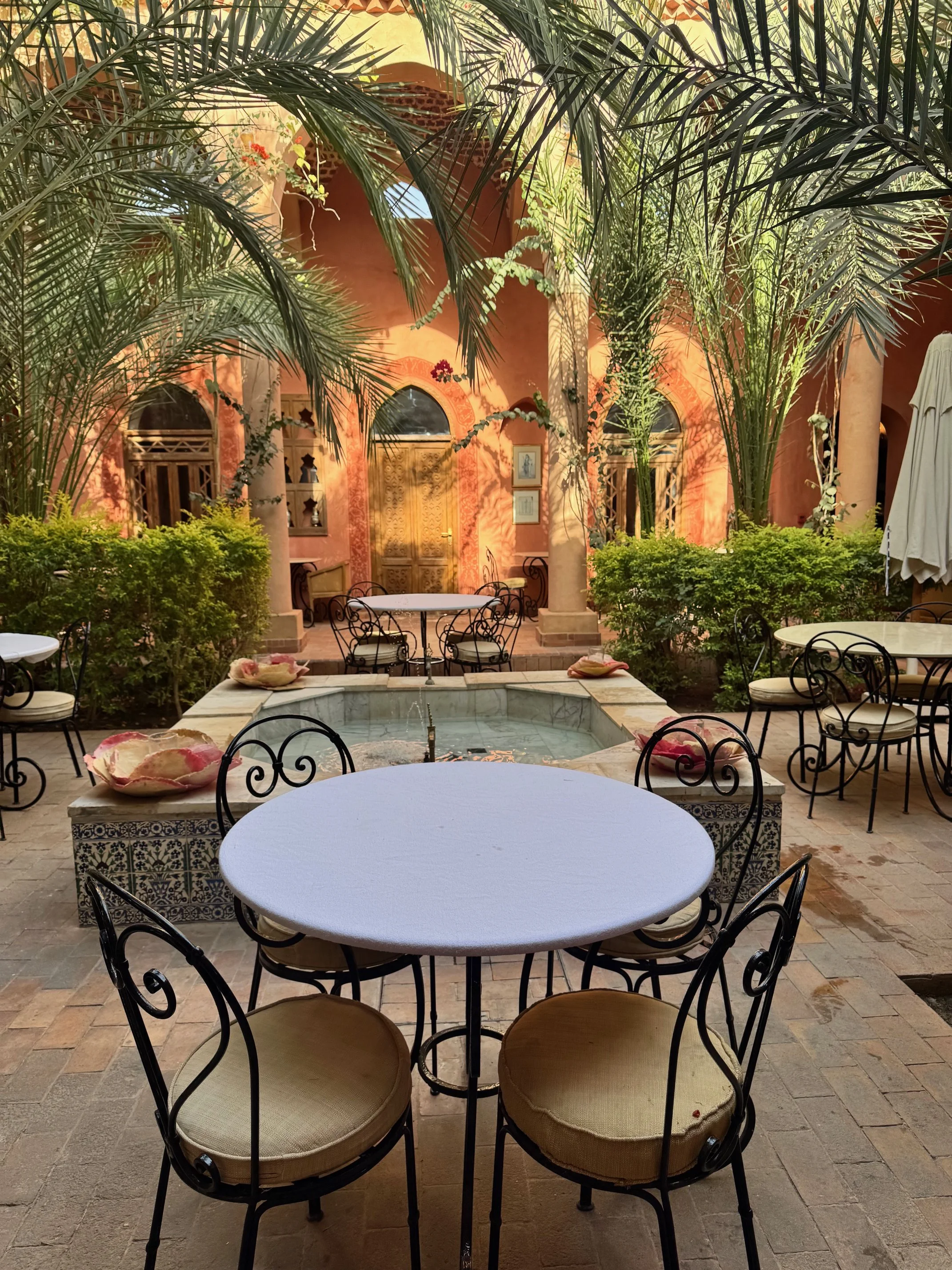
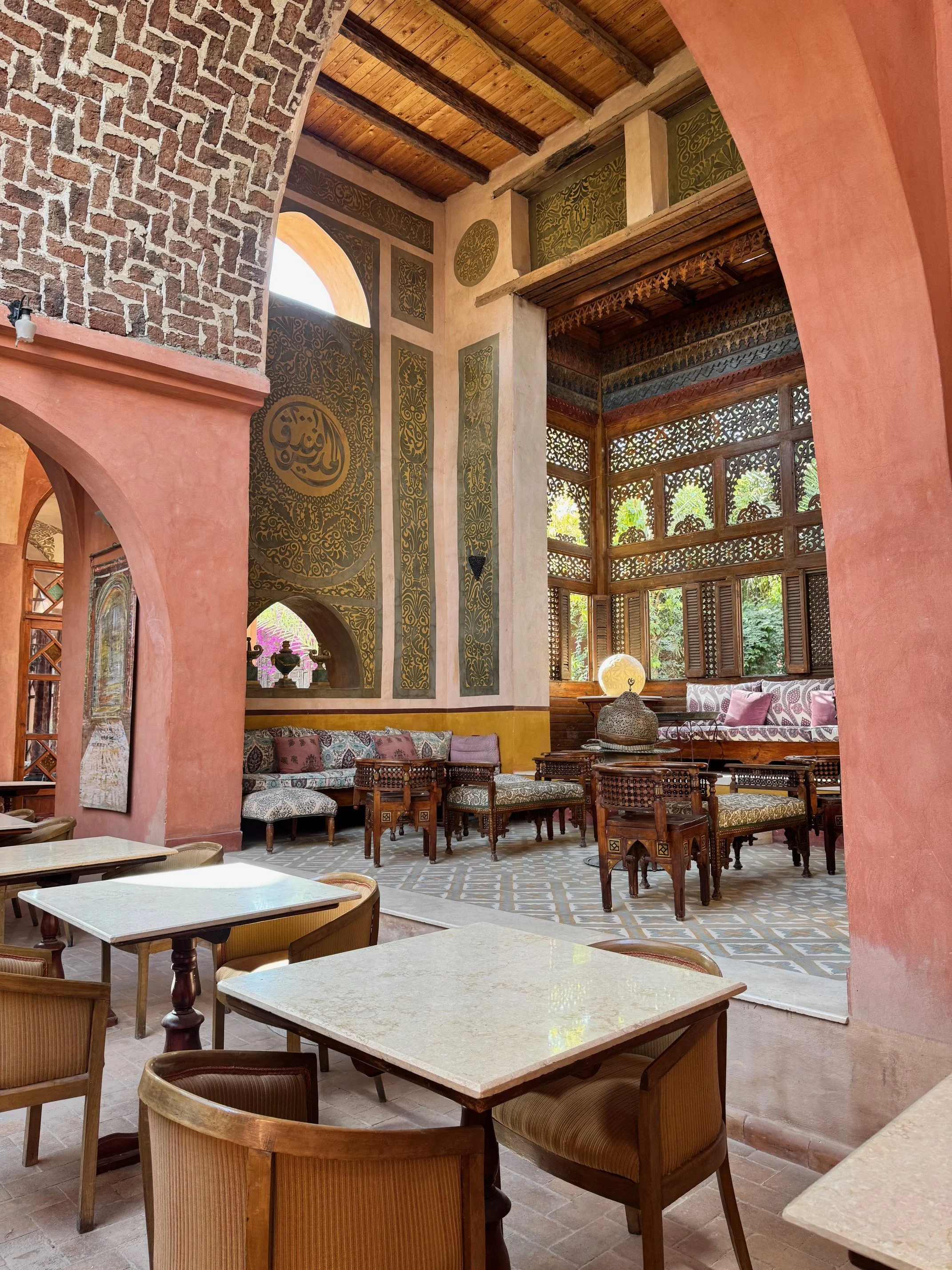
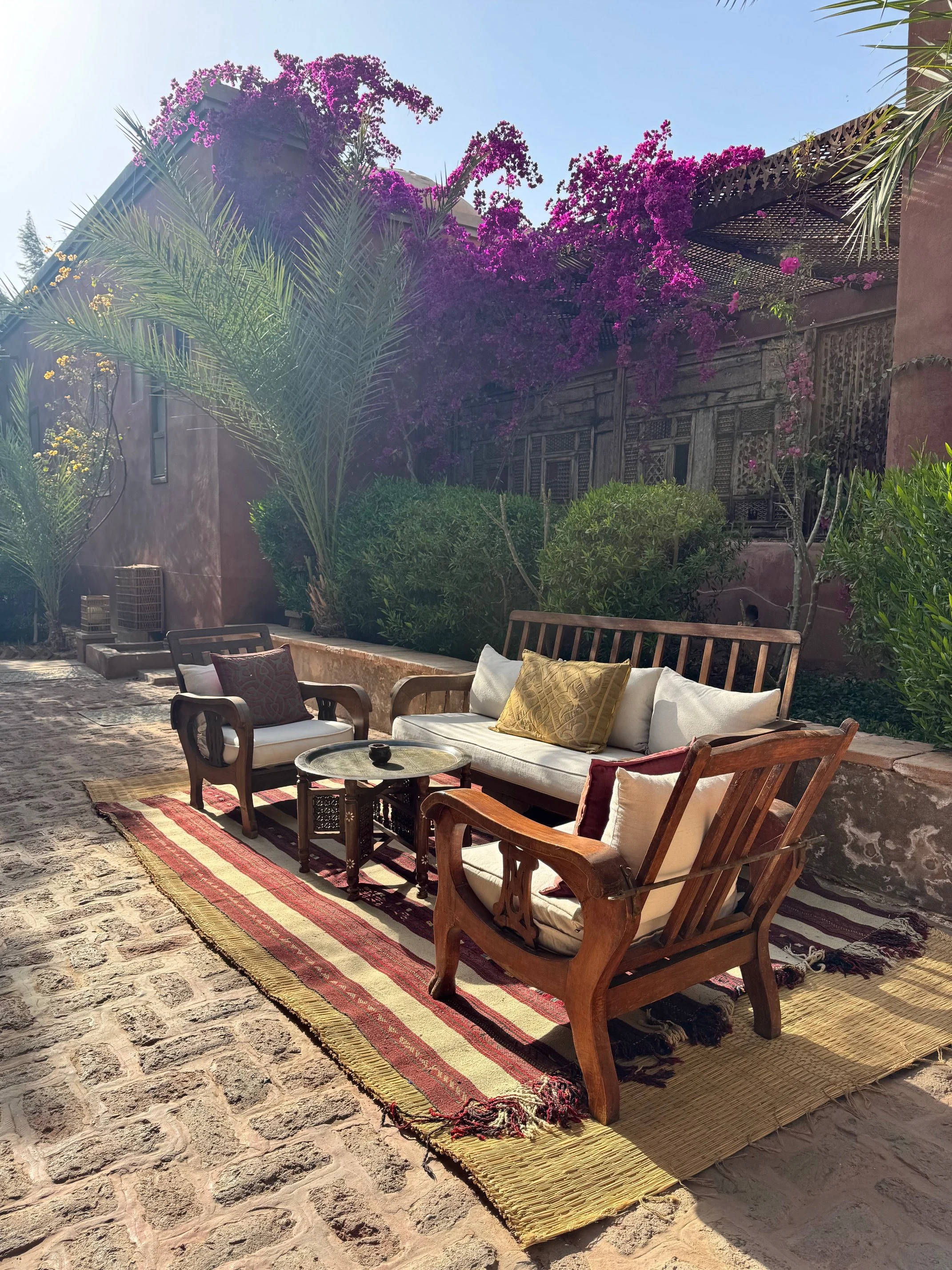
Luxor is unlike anywhere else. Where Cairo’s ancient story is told through pyramids, Luxor was the heart of Egypt during the New Kingdom — the era of Egypt’s greatest imperial power (1550 to 1070 BC). Here the pharaohs built temples for the gods and hid their tombs in the limestone cliffs of the West Bank, where secrecy was meant to protect them for eternity. The East Bank faced the rising sun and belonged to the living; the West Bank faced the setting sun and belonged to the dead.
After a break at the Al Moudira, we departed with our private driver and guide for Karnak Temple, the most ambitious religious building ever constructed. It is not so much a single temple as a sacred city covering more than two hundred acres, built and added to by thirty pharaohs over two thousand years. The hypostyle hall’s 134 columns rise to seventy feet, their surfaces carved and painted with hieroglyphs and sacred scenes in vivid blues, reds, and ochres that have survived three millennia. Karnak was once blazing with color, and enough survives to give you the full, dazzling idea.
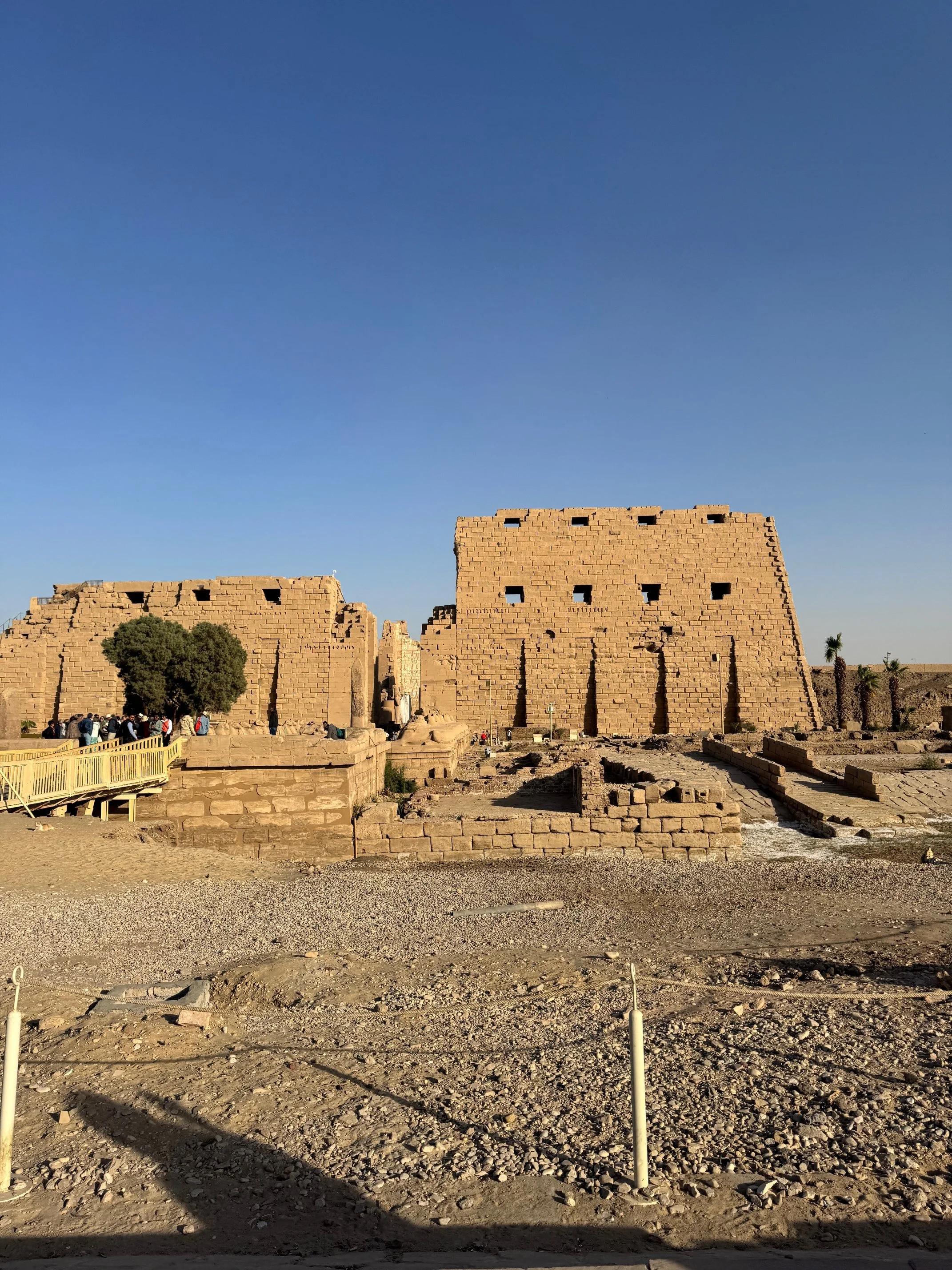
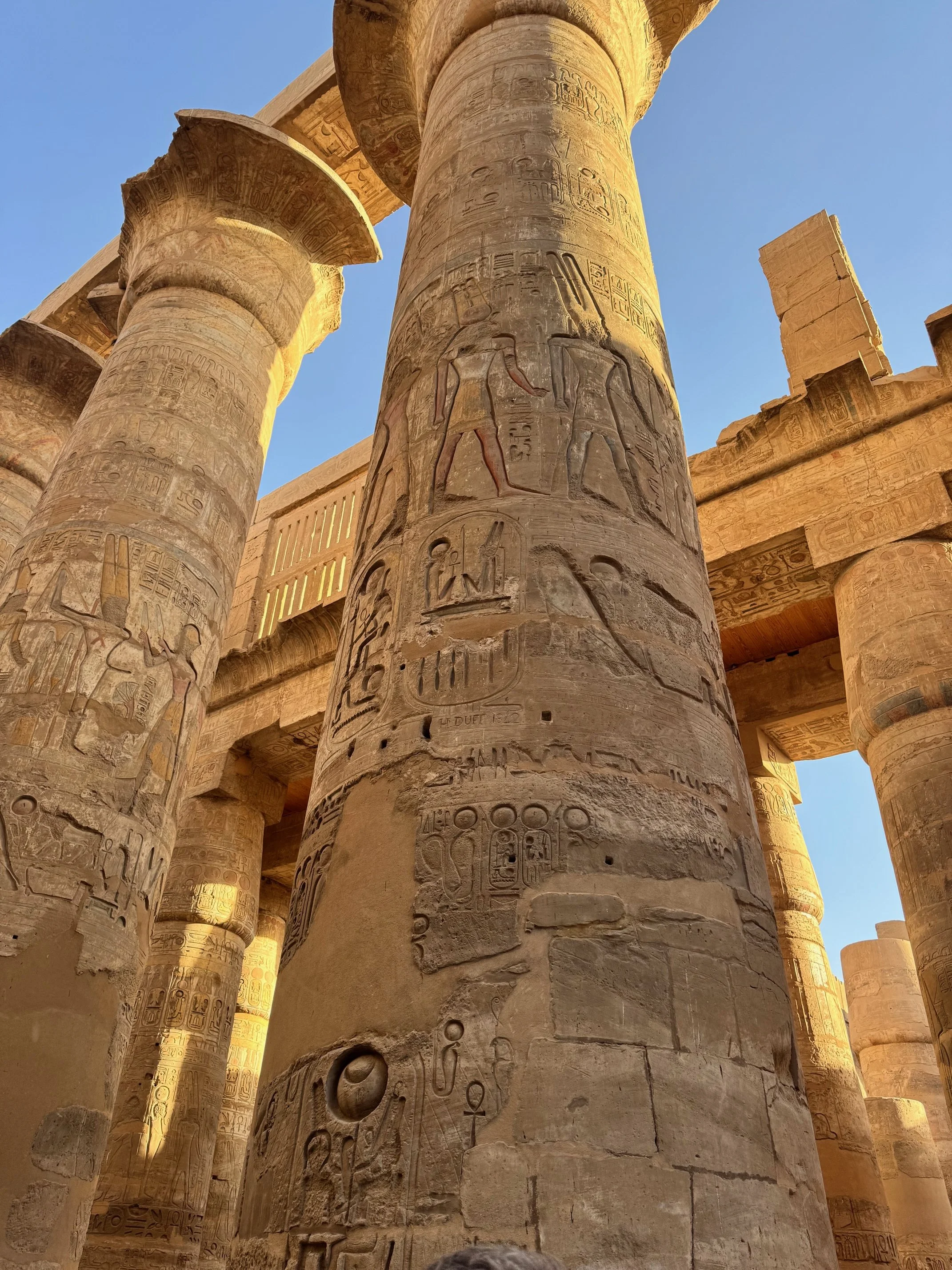
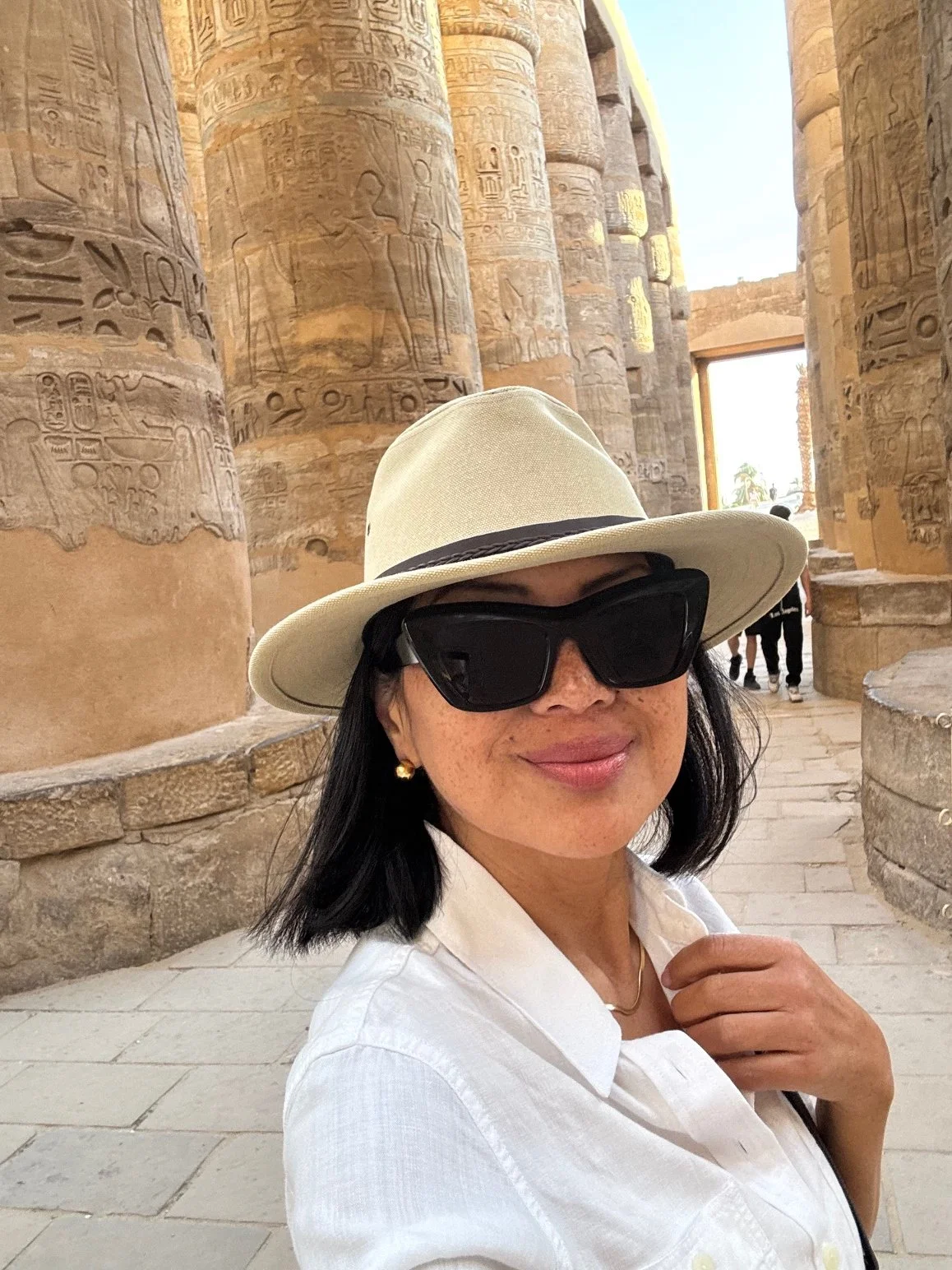
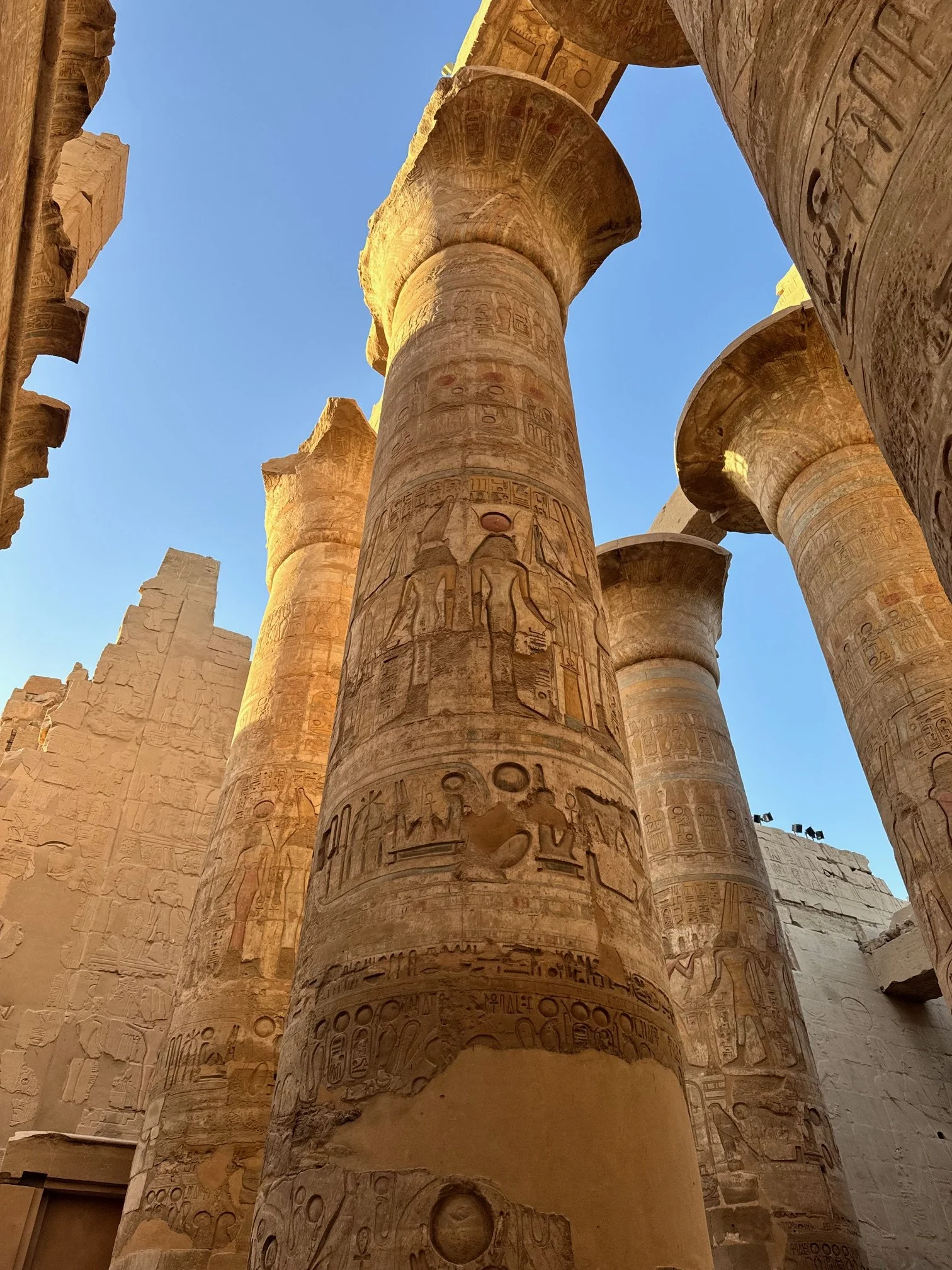
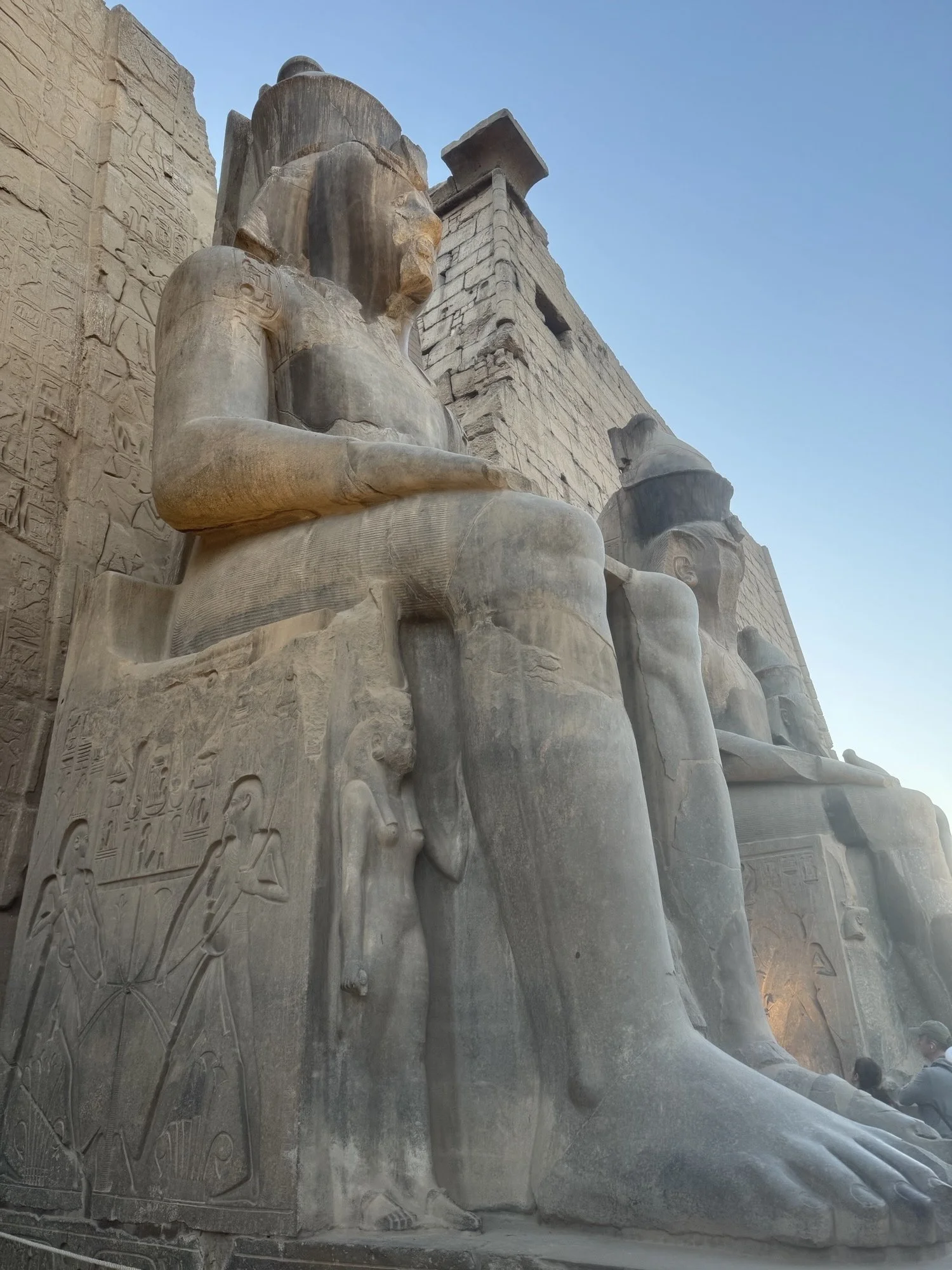
From Karnak we drove south to Luxor Temple as the sun descended. Where Karnak was built for grand state religion, Luxor Temple served a more intimate purpose as the site of the annual Opet Festival, in which the statue of Amun was carried in procession to renew the power of the pharaoh and the fertility of the land. At night, flooded in golden light, it is simply one of the most beautiful sights in the world. As we moved through the temple, the call to prayer rose from the surrounding city and washed over the ancient columns, that most timeless of sounds layering itself over three thousand years of stone in a way that stopped you mid-step and reminded you that this place has never really stopped being sacred.
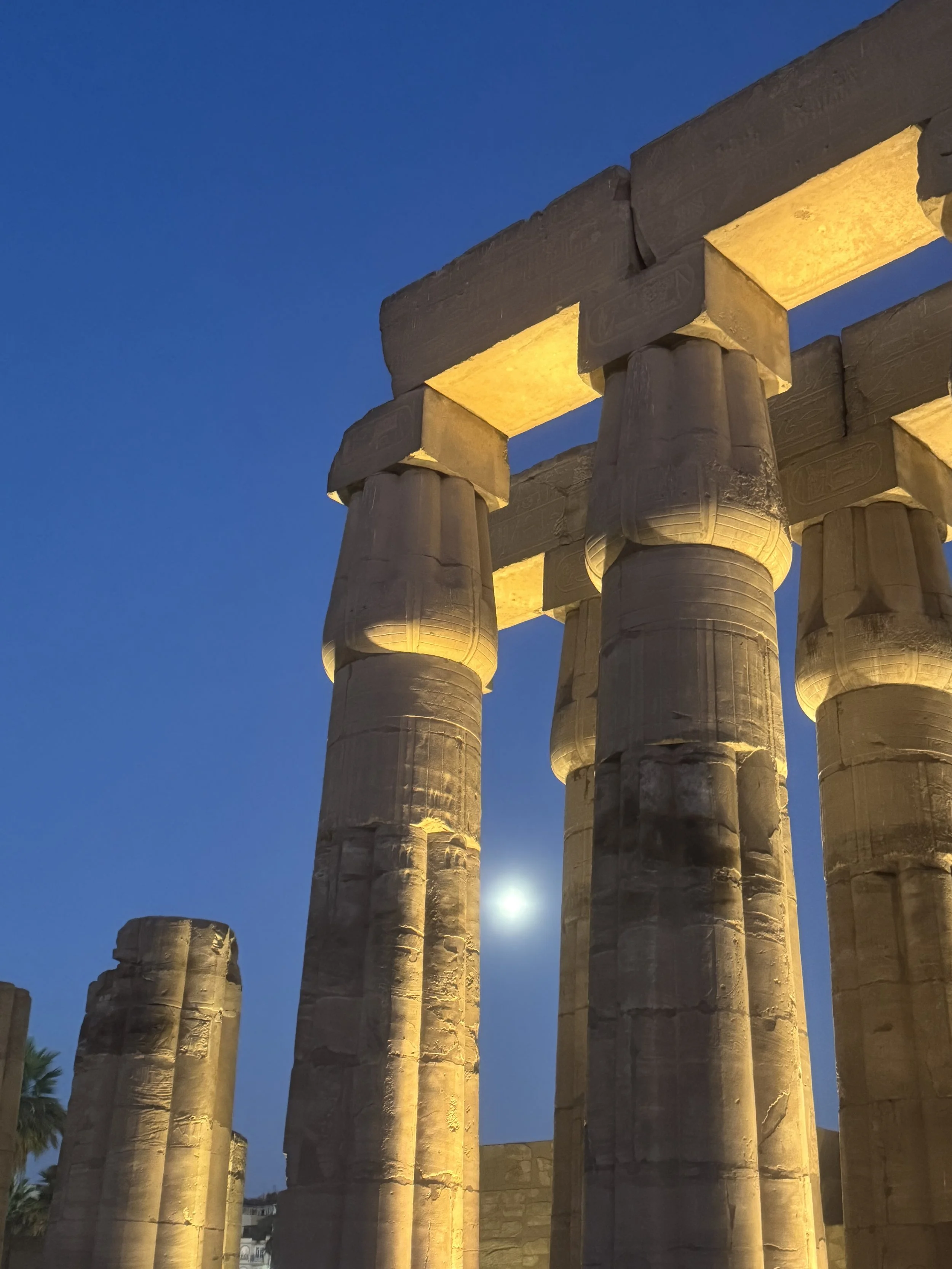
The Valley of the Kings, and a Last Night to Remember
What would end up being our final day in Egypt was dedicated to Luxor’s West Bank – the Valley of the Kings and the Temple of Hatshepsut.
The Valley of the Kings sits in a bowl of pale limestone cliffs, chosen because the ancient Egyptians believed the pyramid-shaped peak above it marked the entrance to the underworld. For nearly five hundred years they cut royal tombs deep into the bedrock. Sixty-three tombs have been discovered so far, ranging from simple chambers to vast subterranean palaces reached by long stairways descending dozens of feet into the rock. To enter one is to leave the world of the living behind. You descend steeply, the temperature drops, and the walls close around you covered floor to ceiling with some of the most extraordinary painted art in human history. Processions of gods and demons, celestial maps, protective serpents, all rendered in vivid yellows, blues, and blacks preserved for three thousand years.
And then there was King Tut’s tomb, the smallest tomb in the valley and a modest set of chambers that belie entirely what Howard Carter found when he broke through its sealed doorway in 1922. Tutankhamun died around nineteen years old, and his tomb was hastily filled with everything a young king would need for eternity. Sealed. Forgotten. Buried for more than three thousand years.
Standing inside those low-ceilinged chambers produced one of the most surreal moments of the entire journey. Days earlier we had stood before King Tut’s golden death mask in the Grand Egyptian Museum, in the silence before the crowds arrived. We had held all of it in our minds as beautiful ancient things in a beautiful modern building. And now here we were, standing in the actual tomb where those objects had sat undisturbed for thirty-two centuries. The walls are painted in warm ochre, unusually intimate, and King Tut’s mummy still rests in his outermost sarcophagus. To feel history fold back on itself in that way — to have seen the objects and then stood in the place that held them for thousands of years — was something no museum experience, however extraordinary, can replicate on its own.
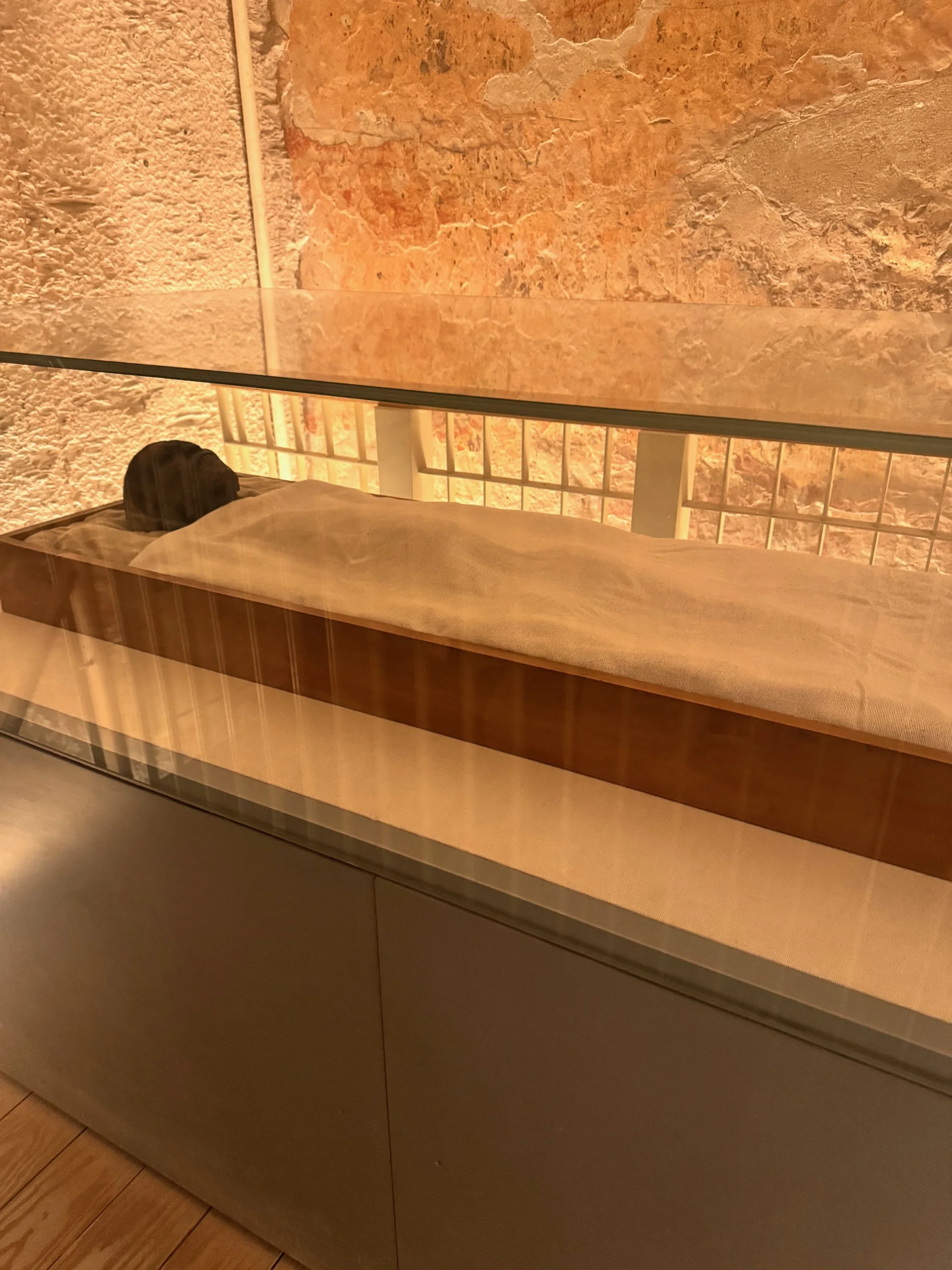
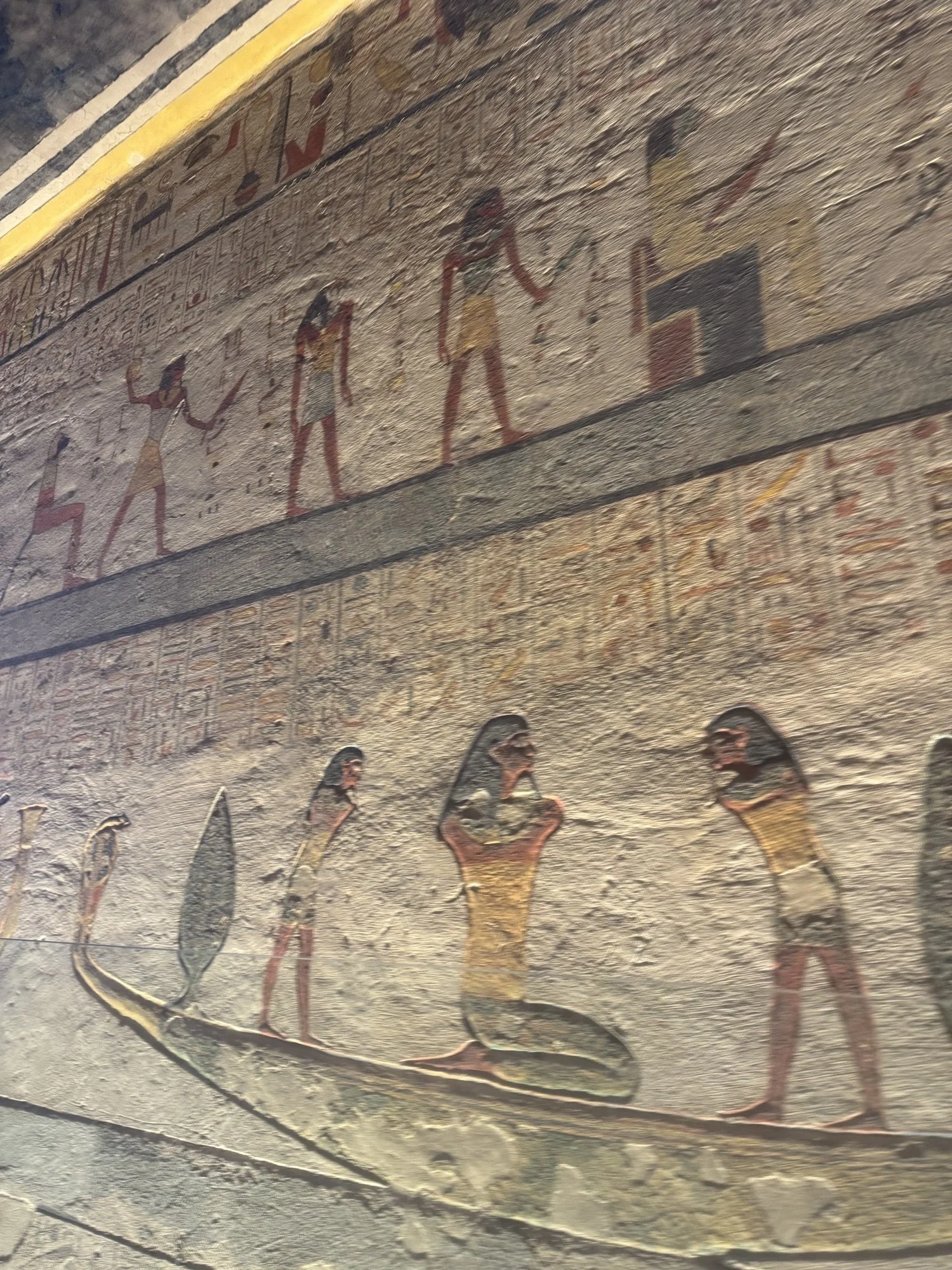
The Temple of Hatshepsut, rising in three colonnaded terraces against the limestone cliffs in a design so clean and horizontal it reads almost as contemporary minimalism, was our final monument. Hatshepsut was one of ancient Egypt's most remarkable rulers, a woman who governed not as queen or regent but as pharaoh in the fullest sense, donning the double crown and the ceremonial beard, commanding armies, ordering obelisks, and presiding over one of the most prosperous periods in Egyptian history. That her successors spent generations attempting to chisel her image from every wall and strike her name from every record, threatened by what she had achieved, makes the fact that her temple still stands feel like a particular kind of justice. Standing in it felt like exactly the right place to say goodbye.
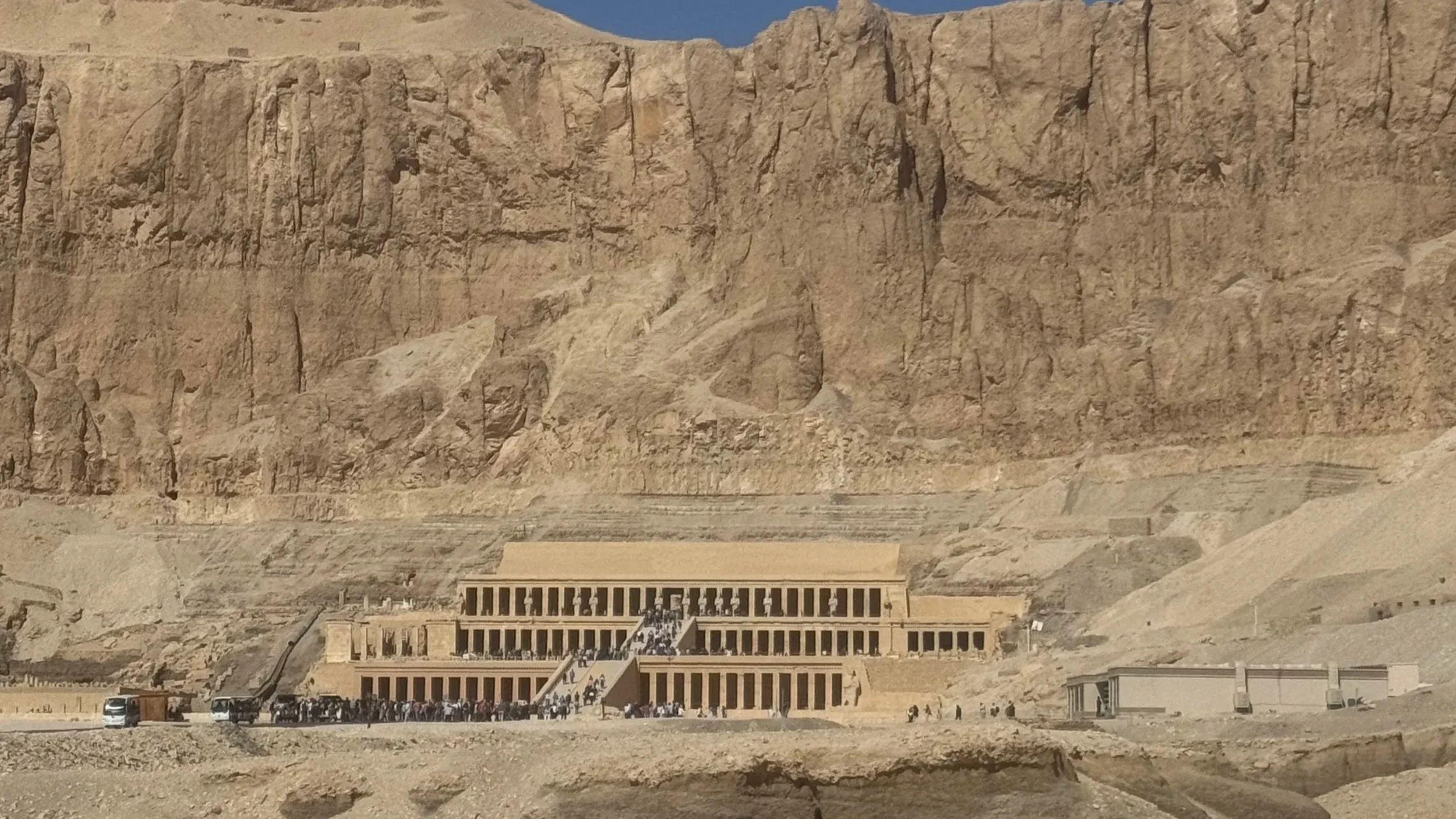
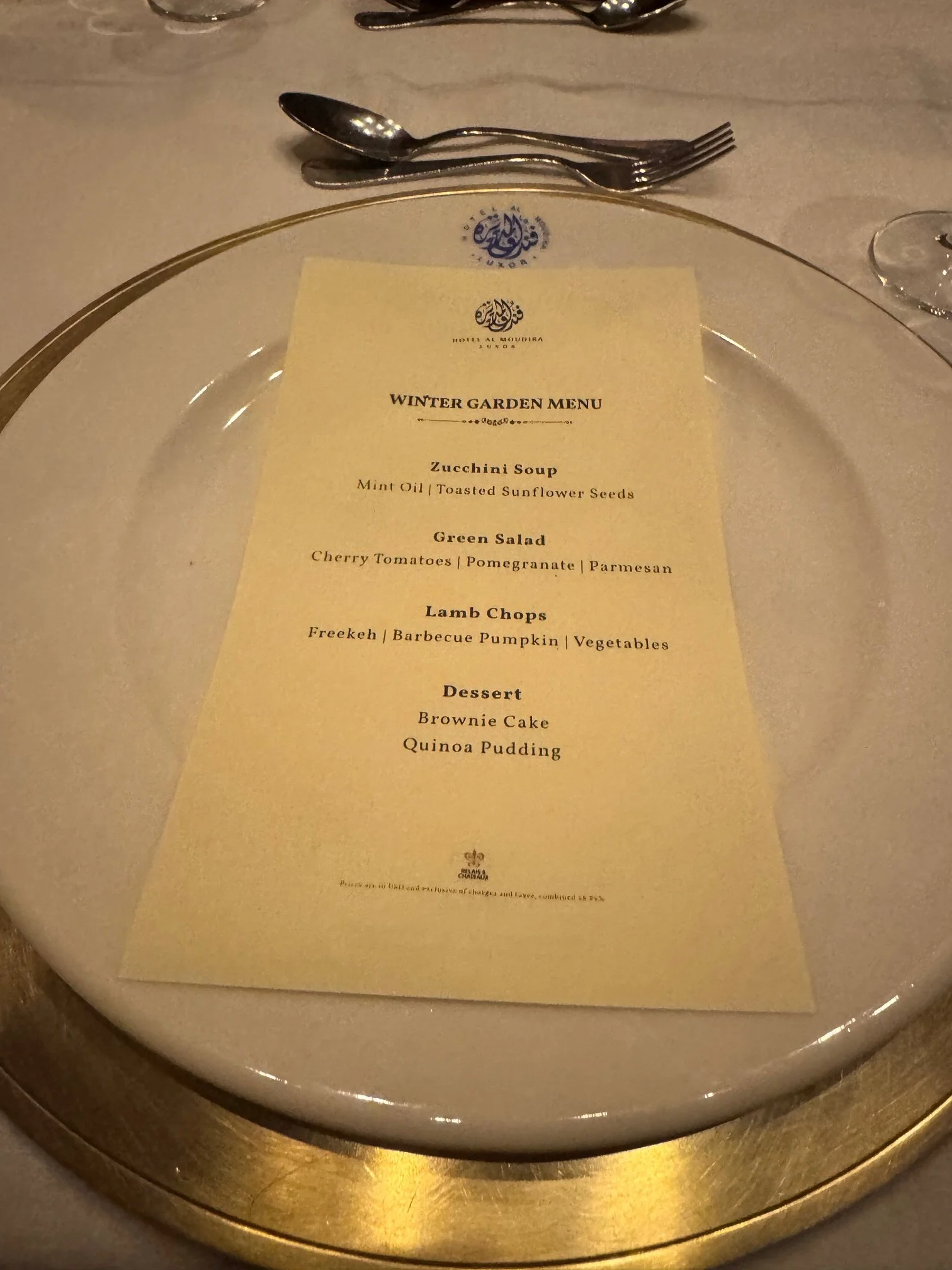
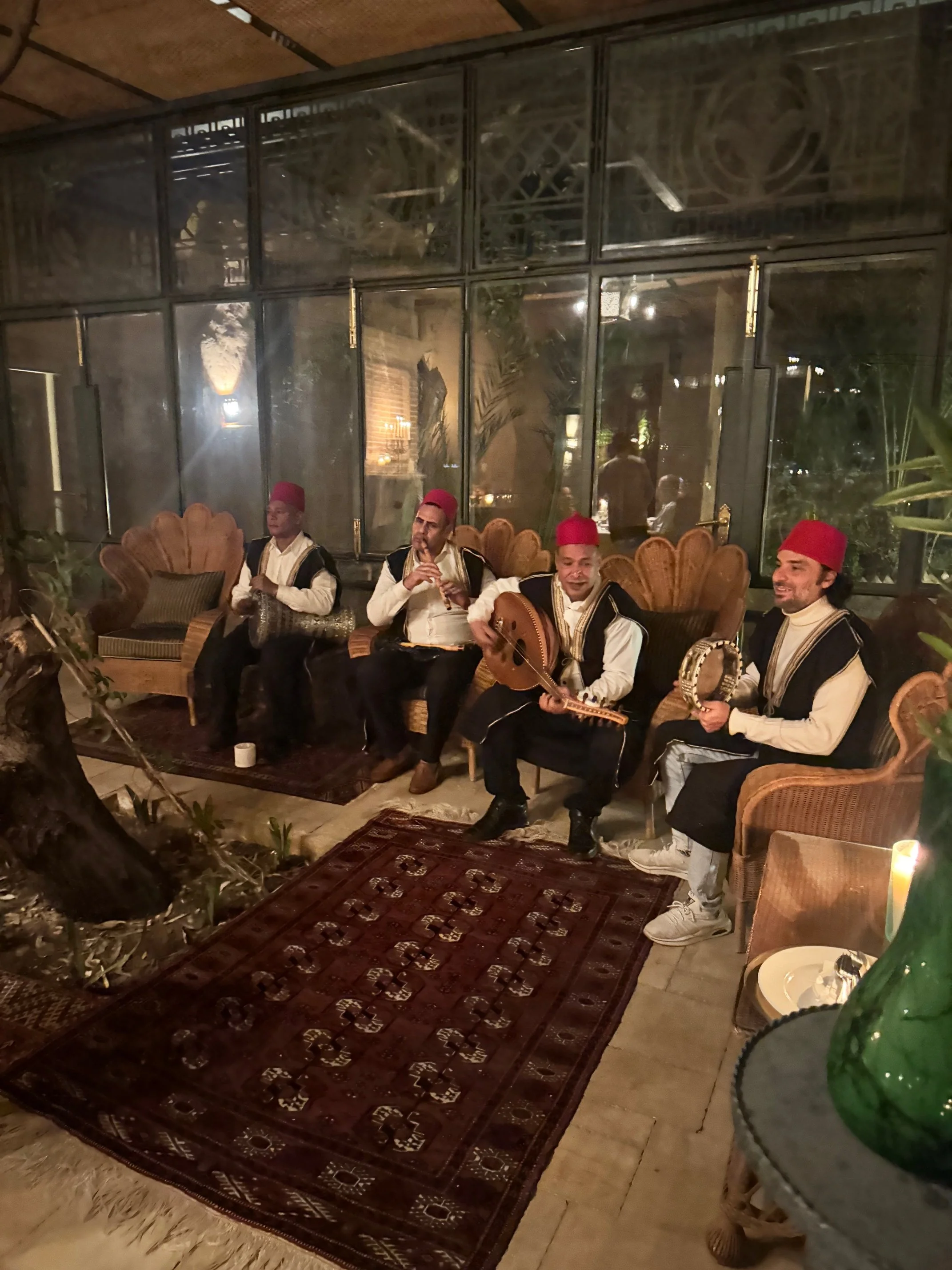
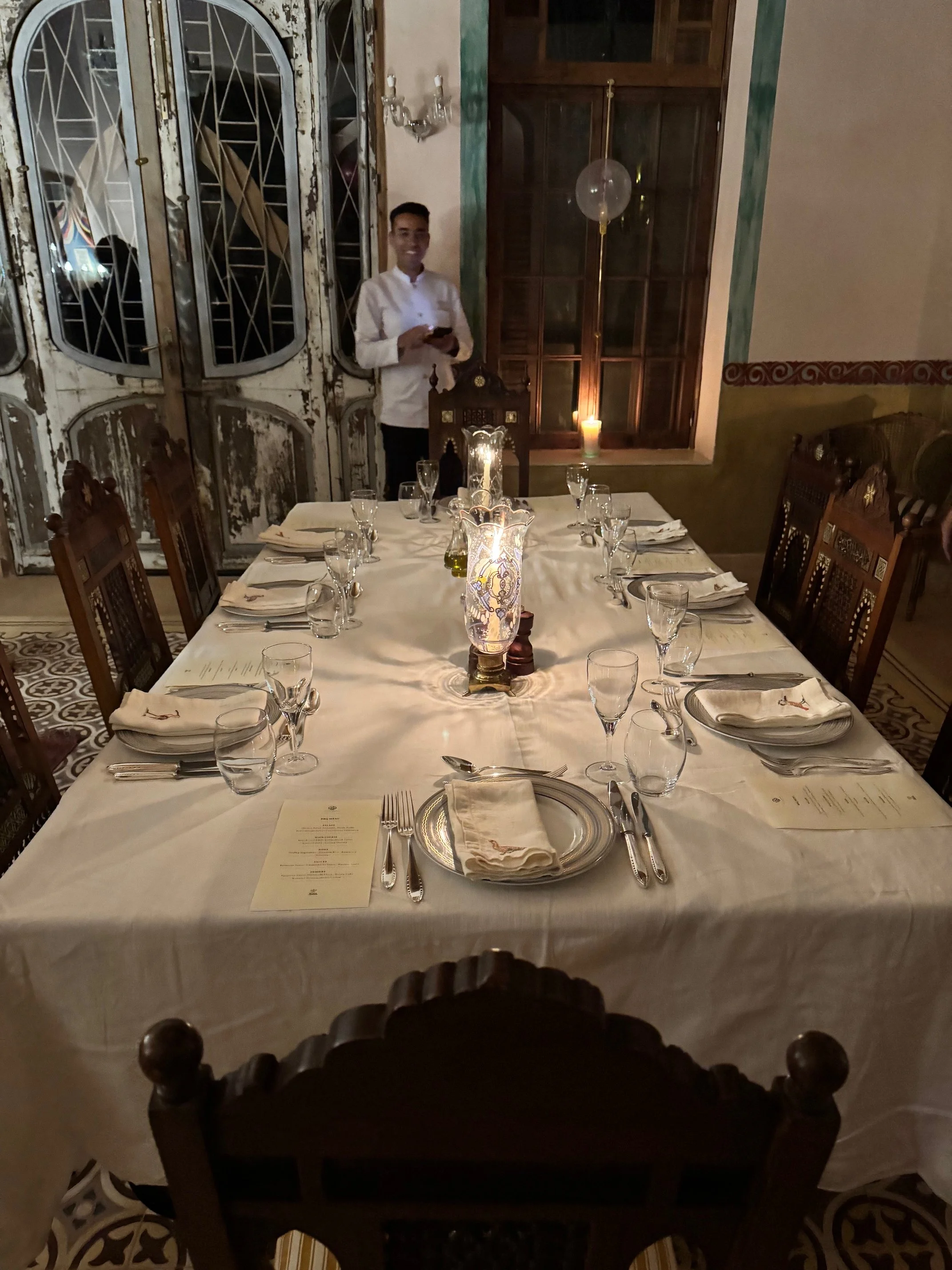
We returned to Al Moudira and let the Villa Nubia do what it does best: restore. A private lunch in the outdoor garden at the Farm Kitchen, unhurried and generous in the West Bank light. That evening, Al Moudira’s Winter Garden became the setting for a private dinner with live entertainment, the room softly lit, music threading through the air, our group lingering at a table nobody wanted to leave. A genuine, unscripted farewell. We departed early the following morning, quietly and gratefully, with the heaviness of people who are not ready to go but know they were lucky to have been there at all.
What Follows . . . Egypt 2027
There is a particular kind of travel that doesn’t simply take you somewhere new but makes you briefly a different version of yourself: more awake, less certain, more curious about what you don’t know yet. Cairo had done that. Luxor had done that. None of it had finished with me yet.
It hadn’t finished with our group either. Before we cleared Egyptian airspace, the conversation had turned to coming back. That conversation has since become a plan: in 2027 we return. We will pick up with our sail on the Nile aboard the Canopus dahabiya and visit Aswan. Then, we will explore regions our first trip did not include, the Red Sea Coast and the northern desert. While we saw many of the main historical and cultural sites in Cairo and Luxor, there is an entire Egypt still waiting, and this group intends to find it.
Back home in California, in the quiet of a morning that now felt like a different planet, I understood clearly that Egypt had rewired something. The contrast only made it sharper. Egypt is not a destination you finish. It is one that changes its mind about what it wants to show you, and then keeps going.